- The Pearl of Great Price Student Manual
- The Book of Moses
The Book of Moses
The Pearl of Great Price Student Manual, (2000), 3–27
Title Page. An Extract from the Translation of the Bible
Soon
after the Church was organized on 6 April 1830, the Lord commanded the
Prophet Joseph Smith to begin an inspired translation, or revision, of
the King James Version of the Bible. Today this inspired revision, which
the Prophet worked on until the time of his death, is known as the
Joseph Smith Translation. The Prophet Joseph Smith restored to the Bible
“many parts which are plain and most precious; and also many covenants
of the Lord [which were] taken away” (1 Nephi 13:26; see also 1 Nephi 13:39–40). Between June 1830 and February 1831, the Prophet completed Genesis 1:1 through 6:13, which is now contained in the Pearl of Great Price as Moses 1–8.
The book of Moses may be divided into two major sections: Moses 1, which relates experiences from Moses’ life that are not found in the book of Genesis, and Moses 2–8,
which contains the inspired and restored account of events described in
the Bible, including the Creation of the earth; the Fall of Adam and
Eve; the story of Cain and Abel; the ministry, teachings, and visions of
Enoch; and the story of Noah up to the time the Lord decreed the
destruction of all flesh by the Flood. At this point, one must return to
Genesis 6:14 for a continuation of the scriptural record.
In an introduction to Moses 1,
the Prophet Joseph Smith wrote: “The Lord, who well knew our infantile
and delicate situation, vouchsafed for us a supply of strength, and
granted us ‘line upon line of knowledge—here a little and there a
little,’ of which the following was a precious morsel” (History of the Church, 1:98).
Moses 1:1–11
God Revealed Himself to Moses
Moses 1:1. “Moses Was Caught Up into an Exceedingly High Mountain”
The vision recorded in Moses 1
took place after Jehovah spoke to Moses at the burning bush but before
Moses led the children of Israel out of Egypt and through the Red Sea
(see Moses 1:17, 25–26).
Moses 1:2, 9–11. Why Could Moses Endure the Presence of God?
Moses was able to endure God’s presence because “the glory of God was upon Moses” (Moses 1:2); he was transfigured (see v. 11; see also D&C 67:10–12). Elder Bruce R. McConkie, who was a member of the Quorum of the Twelve Apostles, wrote:
“Transfiguration
is a special change in appearance and nature which is wrought upon a
person or thing by the power of God. This divine transformation is from a
lower to a higher state; it results in a more exalted, impressive, and
glorious condition. …
“By
the power of the Holy Ghost many prophets have been transfigured so as
to stand in the presence of God and view the visions of eternity” (Mormon Doctrine, 2nd ed. [1966], 803).
Moses 1:3–8. Who Spoke to Moses?
The
personage who spoke to Moses was the premortal Jesus Christ, who is
Jehovah, the God of the Old Testament. Being one with Heavenly Father,
Jesus at times speaks as if He were God the Father (see Moses 1:6).
This is known as divine investiture, whereby Christ is invested with
authority to speak for and in behalf of the Father (see also D&C 29:1, 42, 46).
President
Joseph Fielding Smith wrote: “All revelation since the fall has come
through Jesus Christ, who is the Jehovah of the Old Testament. … He is
the God of Israel, the Holy One of Israel; the one who led that nation
out of Egyptian bondage, and who gave and fulfilled the Law of Moses.
The Father has never dealt with man directly and personally since the
fall, and he has never appeared except to introduce and bear record of
the Son” (Doctrines of Salvation, comp. Bruce R. McConkie, 3 vols. [1954–56], 1:27).
For examples of the Father bearing record of the Son, see Matthew 3:16–17; 17:5; John 12:28; 3 Nephi 11:6–7; Joseph Smith—History 1:17.
Moses 1:4–6. Moses Was a Son of God
All
people on earth are spirit children of God, our Heavenly Father. In a
1909 discourse titled “The Origin of Man,” the First Presidency wrote:
“Man is the child of God, formed in the divine image and endowed with
divine attributes, and even as the infant son of an earthly father and
mother is capable in due time of becoming a man, so the undeveloped
offspring of celestial parentage is capable, by experience through ages
and aeons, of evolving into a God” (Improvement Era, Nov. 1909, 81; see also Acts 17:27–28; Hebrews 12:9; Marion G. Romney, Learning for the Eternities, George J. Romney, comp. [1977], 31–32).
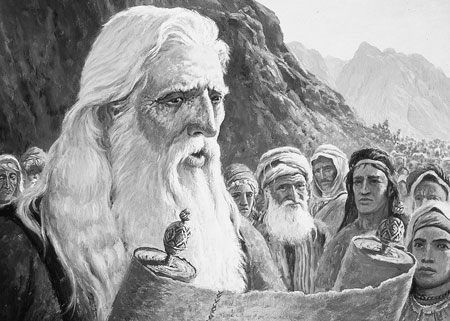
Moses 1:6. “There Is No God beside Me”
The
phrase “there is no God beside me” should not be interpreted to mean
that mankind does not have the eternal potential to become like God. In a
1912 discourse on Moses 1:6, the First Presidency gave the historical context to help us understand this phrase:
“Moses
was reared in an atmosphere of idolatry. There were numerous deities
[gods] among the Egyptians. In commencing the work which the Lord said
he had for Moses to do, it was necessary to center his mind and faith
upon God the Eternal Father as the only Being to worship. …
“… The
sole object of worship, God the Eternal Father, stands supreme and
alone, and it is in the name of the Only Begotten that we thus approach
Him, as Christ taught always” (“Only One God to Worship,” Improvement Era, Apr. 1912, 484–85).
Elder Boyd K. Packer, a member of the Quorum of the Twelve Apostles, explained: “The Father is the one true God. This
thing is certain: no one will ever ascend above Him; no one will ever
replace Him. Nor will anything ever change the relationship that we, His
literal offspring, have with Him. He is Elohim, the Father. He is God.
Of Him there is only one. We revere our Father and our God; we worship Him” (in Conference Report, Oct. 1984, 85; or Ensign, Nov. 1984, 69).
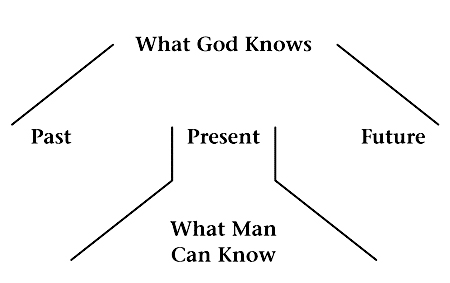
Moses 1:6. “All Things Are Present with Me”
Elder
Neal A. Maxwell, a member of the Quorum of the Twelve Apostles,
explained: “God does not live in the dimension of time as do we. We are
not only hampered by our finiteness (experiential and intellectual), but
also by being in the dimension of time. Moreover, God, since ‘all
things are present’ with him, is not simply predicting based solely on
the past. In ways that are not clear to us, he sees rather than foresees the future, because all things are at once present before him” (Things As They Really Are [1978], 29; see also Alma 40:8; D&C 130:4–7).
Concerning
God’s knowledge of all things, the Prophet Joseph Smith taught:
“Without the knowledge of all things God would not be able to save any
portion of his creatures; for it is by reason of the knowledge which he
has of all things, from the beginning to the end, that enables him to
give that understanding to his creatures by which they are made
partakers of eternal life; and if it were not for the idea existing in
the minds of men that God had all knowledge it would be impossible for
them to exercise faith in him” (Lectures on Faith [1985], 51–52; see also D&C 88:41; 93:8–36).
God’s
foreknowledge of all things does not hinder or limit our freedom to
choose good or evil. Elder James E. Talmage, who was a member of the
Quorum of the Twelve Apostles, wrote: “Many people have been led to
regard this foreknowledge of God as a predestination whereby souls are
designated for glory or condemnation even before their birth in the
flesh, and irrespective of individual merit or demerit. This heretical
doctrine seeks to rob Deity of mercy, justice, and love; it would make
God appear capricious and selfish, directing and creating all things
solely for His own glory, caring not for the suffering of His victims.
How dreadful, how inconsistent is such an idea of God! It leads to the
absurd conclusion that the mere knowledge of coming events must act as a
determining influence in bringing about those occurrences. God’s
knowledge of spiritual and of human nature enables Him to conclude with
certainty as to the actions of any of His children under given
conditions; yet that knowledge is not of compelling force upon the
creature” (The Articles of Faith, 12th ed., [1924], 191).
Moses 1:10. “Man Is Nothing”
Moses
had lived for forty years as a royal prince of Egypt and was revered as
a renowned military leader. After having experienced the power and
glory of God, however, he humbly acknowledged that in comparison, “man
is nothing.” Elder Neal A. Maxwell wrote that Moses’ statement “surely
was not a reflection on man, ‘God’s greatest miracle,’ but a placing of
man in the vast perspective of God’s creations and a realizing, even so,
that we are God’s exclusive work and his greatest glory” (Notwithstanding My Weakness
[1981], 75). Latter-day scripture affirms the truth that with and
through God man can fulfill his divine potential to truly become even as
God (see D&C 76:55–59, 92–95; 88:107; 121:29; 132:20).
Moses 1:12–23
Satan Commanded Moses to Worship Him
Moses 1:19. Why Would Satan Claim to Be “the Only Begotten”?
Satan’s
arrogant claim exposes his basic motivation: to deceive mankind into
worshiping him so that they, like him, will be miserable forever (see 2 Nephi 2:17–18; Moses 4:1–4).
It also reveals Satan’s basic objectives: to seek Heavenly Father’s
power and glory and to supplant and usurp the role of Jesus Christ.
Indeed, Satan seeks to displace the Father Himself.
Moses 1:20. “Moses Began to Fear Exceedingly”
When
he felt afraid in Satan’s presence, Moses saw the bitterness of hell.
Being in constant rebellion toward God truly is a living hell, and that
is the way Satan wants us to live. Yet, there is no need to fear if we
are faithful, for we know that the wisdom of God is greater than the
cunning of the devil (see D&C 10:43). We also know that Satan will eventually be bound (see D&C 45:55; 88:110), will tremble in fear (see D&C 35:24), and will be cast out from this earth and from among its people (see D&C 76:33, 36). We can, even now, bind Satan through righteous living, so that he has no power over us (see 1 Nephi 22:26).
Moses 1:12–22. Satan’s Temptations
Elder
Spencer W. Kimball, then a member of the Quorum of the Twelve Apostles,
gave the following suggestion on how to resist Satan’s temptations:
“The importance of not accommodating temptation in the least
degree is underlined by the Savior’s example. Did not he recognize the
danger when he was on the mountain with his fallen brother, Lucifer,
being sorely tempted by that master tempter? [see Matthew 4:1–11.]
He could have opened the door and flirted with danger by saying, ‘All
right, Satan, I’ll listen to your proposition. I need not succumb, I
need not yield, I need not accept—but I’ll listen.’
“Christ
did not so rationalize. He positively and promptly closed the
discussion, and commanded: ‘Get thee hence, Satan,’ meaning, likely,
‘Get out of my sight—get out of my presence—I will not listen—I will
have nothing to do with you.’ Then, we read, ‘the devil leaveth him.’
“This
is our proper pattern, if we would prevent sin rather than be faced
with the much more difficult task of curing it. As I study the story of
the Redeemer and his temptations, I am certain he spent his energies
fortifying himself against temptation rather than battling with it to
conquer it” (The Miracle of Forgiveness [1969], 216–17).
Moses 1:24–42
Moses Learned More About the Work of God
Moses 1:24. The Holy Ghost Was on the Earth in Old Testament Times
From
the time of Adam, the Holy Ghost has been on the earth inspiring and
testifying to God’s children. President Joseph Fielding Smith said: “The
fact is all the prophets had the Holy Ghost.
They were led and directed by him. And without this power they would
not have been prophets. Peter said that prophecy itself ‘came not in old
time by the will of man: but holy men of God spake as they were moved
by the Holy Ghost’ [2 Peter 1:21].
The Book of Moses, which is the original and perfect record of a part
of Genesis, speaks of the Holy Ghost; so do the Nephite prophets,
including those who lived in the era before Christ” (Doctrines of Salvation, 1:46–47).
Moses 1:35–38. “There Are Many Worlds”
President
Brigham Young said: “How many earths are there? I observed this morning
that you may take the particles of matter composing this earth, and if
they could be enumerated they would only be a beginning to the number of
the creations of God; and they are continually coming into existence,
and undergoing changes and passing through the same experience that we
are passing through” (in Journal of Discourses, 14:71).
Moses 1:35–39. Jesus Christ Redeemed All of God’s Creations
Elder Marion G. Romney, then a member of the Quorum of the Twelve Apostles, taught:
“Jesus
Christ, in the sense of being its Creator and Redeemer, is the Lord of
the whole universe. Except for his mortal ministry accomplished on this
earth, his service and relationship to other worlds and their
inhabitants are the same as his service and relationship to this earth
and its inhabitants. …
“… In
short, Jesus Christ, through whom God created the universe, was chosen
to put into operation throughout the universe Elohim’s great plan ‘to
bring to pass the immortality and eternal life of man’—the gospel of
Jesus Christ—the only way whereby man can obtain eternal life” (“Jesus
Christ: Lord of the Universe,” Improvement Era, Nov. 1968, 46, 48; see also D&C 76:19–24).
Moses 1:39. Immortality and Eternal Life
Elder Bruce R. McConkie wrote: “Immortality is to live forever in the resurrected state with body and spirit inseparably connected” (Mormon Doctrine, 376). All of God’s children who obtain mortal bodies will eventually be resurrected and obtain immortal physical bodies (see 1 Corinthians 15:22).
President
Joseph Fielding Smith said: “Eternal life is to have the kind of life
that God has. All those who become servants will have immortality, but
they who become sons and daughters of God will have the additional gift
of eternal life, which is the greatest gift of God” (Doctrines of Salvation,
2:8). President Spencer W. Kimball taught that “eternal life is to gain
exaltation in the highest heaven” (in Conference Report, Oct. 1978,
109; or Ensign, Nov. 1978, 72).
Moses 1:39. The Unselfishness of God
After quoting Moses 1:39,
President Marion G. Romney, who was a counselor in the First
Presidency, said: “Hence, we see the complete unselfishness of our
Father in Heaven. His whole work and glory is to bring eternal life and
happiness to his children. Should not our whole purpose in this life,
therefore, be made up of righteous service one to another? If not, how
can we ever hope to be as he is?” (in Conference Report, Oct. 1981, 132;
or Ensign, Nov. 1981, 93).
Moses 1:40–41. Moses Was Assigned to Write about This Earth
In
addition to his calling to free the children of Israel from Egyptian
bondage, Moses was given the assignment to write about the events that
occurred from the Creation of the earth until the final days of his own
mission. The first five books of the Bible contain the writings of
Moses. However, some of the truths Moses recorded in those five books
were removed from the Bible by wicked men who altered the biblical text
(see 1 Nephi 13:24–28; Moses 1:23). By revelation, the Prophet Joseph Smith restored many truths that were lost (see 2 Nephi 3:6–15; Moses 1:41).
Moses 2:1–25
The Physical Creation of Heaven and Earth
Moses 2. An Account of the Physical Creation
President
Joseph Fielding Smith said: “The account of the creation of the earth
as given in Genesis, and the Book of Moses, and as given in the temple,
is the creation of the physical earth, and of physical animals and
plants” (Doctrines of Salvation, 1:75).
Moses 2:1. Who Created the Earth?
Jesus Christ created the heaven and the earth under the Father’s direction (see Moses 1:31–33; 2:1).
Others were privileged to assist Him in the Creation, including
Michael, or Adam. President Joseph Fielding Smith said: “It is true that
Adam helped to form this earth. He labored with our Savior Jesus
Christ. I have a strong view or conviction that there were others also
who assisted them. Perhaps Noah and Enoch; and why not Joseph Smith, and
those who were appointed to be rulers before the earth was formed?” (Doctrines of Salvation, 1:74–75).
Moses 2:1. The Earth Was Not Created by Accident nor Chance
Elder
John A. Widtsoe, who was a member of the Quorum of the Twelve Apostles,
said: “The earth came into being by the will and power of God. … Chance
is ruled out. Latter-day Saints believe that the earth and the heavens
and the manifold operations within the universe are products of
intelligent action, of the mind of God” (Evidences and Reconciliations, arr. G. Homer Durham, [1960], 150).
Moses 2:3. God Works by the Power of Faith
The Prophet Joseph Smith taught:
“When
a man works by faith he works by mental exertion instead of physical
force. It is by words, instead of exerting his physical powers, with
which every being works when he works by faith. God said, ‘Let there be
light: and there was light.’ … And the Saviour says: ‘If you have faith
as a grain of mustard seed, say to this mountain, “Remove,” and it will
remove; or say to that sycamore tree, “Be ye plucked up, and planted in
the midst of the sea,” and it shall obey you.’ Faith, then, works by
words; and with these its mightiest works have been, and will be,
performed. …
“… The
whole visible creation, as it now exists, is the effect of faith. It
was faith by which it was framed, and it is by the power of faith that
it continues in its organized form, and by which the planets move round
their orbits and sparkle forth their glory” (Lectures on Faith, 72–73; see also Matthew 17:20; Jacob 4:6, 9).
Moses 2:3–4. “There Was Light”
Elder
John Taylor, then a member of the Quorum of the Twelve Apostles,
explained that God “caused light to shine upon [the earth] before the
sun appeared in the firmament [see Moses 2:3–4, 14–19];
for God is light, and in him there is no darkness. He is the light of
the sun and the power thereof by which it was made; he is also the light
of the moon and the power by which it was made; he is the light of the
stars and the power by which they are made” (in Journal of Discourses, 18:327; see also Revelation 21:23–25; D&C 88:7–13).
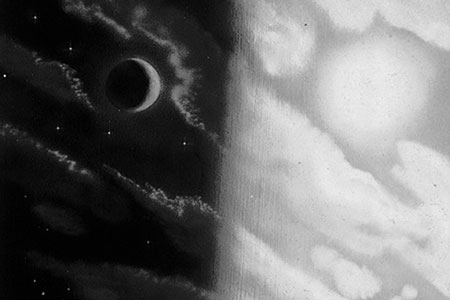
Moses 2:5. How Long Was a Day of Creation?
President
Brigham Young, discussing the six days of creation, said that six days
“is a mere term, but it matters not whether it took six days, six
months, six years, or six thousand years. The creation occupied certain
periods of time. We are not authorized to say what the duration of these
days was, whether Moses penned these words as we have them, or whether
the translators of the Bible have given the words their intended
meaning. However, God created the world. God brought forth material out
of which he formed this little terra firma upon which we roam. How long
had this material been in existence? Forever and forever, in some shape,
in some condition” (Discourses of Brigham Young, sel. John A. Widtsoe [1971], 100; see also Alma 40:8)
Elder
Bruce R. McConkie taught that a day, in the Creation accounts, “is a
specified time period; it is an age, an eon, a division of eternity; it
is the time between two identifiable events. And each day, of whatever
length, has the duration needed for its purposes. …
“There
is no revealed recitation specifying that each of the ‘six days’
involved in the Creation was of the same duration” (“Christ and the
Creation,” Ensign, June 1982, 11).
Moses 2:6–8. The Firmament Divided the Waters
Elder
Bruce R. McConkie taught: “‘The waters’ were ‘divided’ between the
surface of the earth and the atmospheric heavens that surround it. A
‘firmament’ or an ‘expanse’ called ‘Heaven’ was created to divide ‘the
waters which were under the expanse from the waters which were above the
expanse.’ Thus, as the creative events unfold, provision seems to be
made for clouds and rain and storms to give life to that which will yet
grow and dwell upon the earth. (See Moses 2:6–8; Abr. 4:6–8.)” (Ensign, June 1982, 11).
Moses 2:11–12, 21, 24–25. “After Their Kind”
Elder
Boyd K. Packer taught: “No lesson is more manifest in nature than that
all living things do as the Lord commanded in the Creation. They
reproduce ‘after their own kind.’ (See Moses 2:12, 24.)
They follow the pattern of their parentage. … A bird will not become an
animal nor a fish. A mammal will not beget reptiles, nor ‘do men gather
… figs of thistles’ (Matthew 7:16)” (in Conference Report, Oct. 1984, 83; or Ensign, Nov. 1984, 67).
Moses 2:26–31
The Physical Creation of Man and Woman
Moses 2:26–27. God Has a Body of Flesh and Bones
Modern revelation declares that Heavenly Father “has a body of flesh and bones as tangible as man’s” (D&C 130:22). The Church of Jesus Christ of Latter-day Saints accepts Genesis 1:26 and Moses 2:26 literally. As children of our Heavenly Father, our physical bodies and our spirit bodies are in His image.
Moses 2:26–27. “Male and Female Created I Them”
The
First Presidency and the Quorum of the Twelve Apostles have affirmed:
“All human beings—male and female—are created in the image of God. Each
is a beloved spirit son or daughter of heavenly parents, and, as such,
each has a divine nature and destiny. Gender is an essential
characteristic of individual premortal, mortal, and eternal identity and
purpose” (“The Family: A Proclamation to the World,” Ensign, Nov. 1995, 102).
Moses 2:28. What Does Replenish Mean?
An analysis of the Hebrew text of Genesis 1:28
can help us better understand God’s instructions to the man and woman
when He said, “Be fruitful, and multiply, and replenish the earth.” The
word translated “fruitful” in this verse is parah (paw-raw) in Hebrew and means “to increase, bear, or bring fruit.” The word translated “multiply” is rabah (raw-baw) and means “to become many.” The Hebrew word male
(maw-lay) is here translated “replenish” and means “to fill, or be
full.” The Lord is telling men and women to bring forth children
(multiply, be fruitful).
In
1942 the First Presidency taught: “The Lord has told us that it is the
duty of every husband and wife to obey the command given to Adam to
multiply and replenish the earth, so that the legions of choice spirits
waiting for their tabernacles of flesh may come here and move forward
under God’s great design to become perfect souls, for without these
fleshly tabernacles they cannot progress to their God-planned destiny.
Thus, every husband and wife should become a father and mother in Israel
to children born under the holy, eternal covenant” (in Conference
Report, Oct. 1942, 12).
Moses 2:28. Man Was Given Dominion
Elder
Joseph Fielding Smith, then a member of the Quorum of the Twelve
Apostles, wrote that to have “dominion” means to have responsibility
(see The Way to Perfection, 6th ed. [1946], 221). To have dominion over all living things is a sacred responsibility and should not be misused (see D&C 49:19–21; 59:17–20; 104:13–18; 121:39–46).
Elder
Sterling W. Sill, then an Assistant to the Quorum of the Twelve
Apostles, taught: “One of the most inspiring messages in all sacred
scripture is the story of the sixth day of creation when God made man in
his own image. He also endowed him with a set of his own attributes.
Then, as the very climax of creation, God gave man dominion over
everything upon the earth, including himself. The dictionary says that
‘dominion’ means control or the power to govern. The most important part
of the dominion given to man was self-dominion” (in Conference Report,
Oct. 1963, 77–78).
Moses 3:1–7
All Things Were First Created Spiritually
Moses 3:1. What Do We Know about the Premortal Condition of Mankind?
Some of the significant events that occurred in the premortal existence were:
-
1.
All mankind were born as spirit sons and daughters of God the Father (see D&C 93:29, 38; Moses 6:51).
-
2.
Heavenly Father’s children participated in a council and chose to follow His plan or to rebel with Lucifer (see D&C 29:36; Moses 4:1–3).
-
3.
Those who chose to follow Heavenly Father’s plan chose to
follow Christ and continued to grow and progress; some of them
participated in the Creation of the earth (see D&C 138:55–56; Abraham 3:22–24; 4:1).
-
4.
A paradisical earth was created and immortal, paradisical
bodies were prepared for Adam and Eve, the first of all of God’s spirit
sons and daughters to come to this earth.
Moses 3:1. Who Are “All the Host”?
The
Prophet Joseph Smith said: “Every man who has a calling to minister to
the inhabitants of the world was ordained to that very purpose in the
Grand Council of heaven before this world was. I suppose I was ordained
to this very office in that Grand Council” (Teachings of the Prophet Joseph Smith, sel. Joseph Fielding Smith [1976], 365).
President Joseph Fielding Smith taught:
“The
Lord informed Abraham that he had chosen rulers from among the
intelligences that were organized, to be given in various capacities
down the ages; and Abraham was one of these who was so chosen [see Abraham 3:22–23].
“It
is reasonable to believe that in the beginning, before the earth was
prepared, the Lord would have all things organized from the beginning to
the end of time. It is written in the scriptures: ‘Thus the heavens and
the earth were finished, and all the hosts of them.’ This is equivalent
to the Lord’s saying that everything was in preparation to be placed on
the earth in its due course when mankind should be placed upon it” (Answers to Gospel Questions, comp., Joseph Fielding Smith Jr., 5 vols. [1957–66], 5:182).
Moses 3:2–3. What Does It Mean That God “Rested”?
Elder Dallin H. Oaks taught:
“The Sabbath was blessed and sanctified as a holy day, a day of rest (Genesis 2:3; Moses 3:3; Exodus 20:9–11).
But this sanctification and commandment of rest was for a purpose—not
that man should refrain from work in order to pursue his own pleasure,
but that man should serve God and worship him. …
“President
Spencer W. Kimball put our teaching on Sabbath observance in a nutshell
when he suggested that we ‘measure each Sabbath activity by the
yardstick of worshipfulness’ (The Teachings of Spencer W. Kimball, Edward L. Kimball, ed. [Salt Lake City: Bookcraft, 1982], p. 219)” (Pure In Heart [1988], 27–29; see also Isaiah 58:13–14; JST, Mark 2:26–27; and D&C 59:9).
Moses 3:4. What Does “the Generations of the Heaven and of the Earth” Refer To?
The Hebrew word for “generations” is towldah (to-led-aw), which in this verse simply means “accounting” or “story.”
Moses 3:5. An Interpolation Showing That Everything Was First Created Spiritually
President Joseph Fielding Smith explained:
“There
is no account of the creation of man or other forms of life when they
were created as spirits. There is just the simple statement that they
were so created before the physical creation. The statements in Moses 3:5 and Genesis 2:5
are interpolations [parenthetical explanations] thrown into the account
of the physical creation, explaining that all things were first created
in the spirit existence in heaven before they were placed upon this
earth.
“We were all created untold ages before we were placed on this earth. We discover from Abraham 3:22–28,
that it was before the earth was formed that the plan of salvation was
presented to the spirits, or ‘intelligences.’ This being true, then man,
animals and plants were not created in the spirit at the time of the
creation of the earth, but long before” (Doctrines of Salvation, 1:75–76).
In
1925 the First Presidency taught: “Man, as a spirit, was begotten and
born of heavenly parents, and reared to maturity in the eternal mansions
of the Father, prior to coming upon the earth in a temporal body to
undergo an experience in mortality” (“‘Mormon’ View of Evolution,” Improvement Era, Sept. 1925, 1090; see also D&C 77:2).
Moses 3:6–7. How Did God Create Bodies for Adam and Eve?
President
Spencer W. Kimball said: “Man became a living soul—mankind, male and
female. The Creators breathed into their nostrils the breath of life and
man and woman became living souls. We don’t know exactly how their
coming into this world happened, and when we’re able to understand it
the Lord will tell us” (“The Blessing and Responsibilities of
Womanhood,” Ensign, Mar. 1976, 72).
Moses 3:7. Man Was Formed “from the Dust of the Ground”?
Elder
Bruce R. McConkie wrote: “Those natural elements that make up the
physical earth are sometimes referred to in the scriptures as dust.
Thus Adam was created from the dust of the ground meaning that the
physical body which he received was created from the elements of the
earth. (Gen. 2:7; Moses 3:7; Abra. 5:7; D&C 77:12.)
Similarly all men are created from the dust of the earth; that is, the
elements organized into a mortal body are assembled together through the
birth process (Moses 6:69)” (Mormon Doctrine, 209).
In the physical creation, man became a “living soul” (see Moses 2:26–27; see also D&C 88:15).
This means his spirit body gained a physical body of flesh and bones.
President Joseph Fielding Smith explained that the bodies of Adam and
Eve were at first “quickened [made alive] by spirit and not by blood. …
After the fall, which came by a transgression of the law under which
Adam was living, the forbidden fruit had the power to create blood and
change his nature and mortality took the place of immortality, and all
things, partaking of the change, became mortal” (Doctrines of Salvation, 1:77). Thus, in the Fall, Adam and Eve became the first beings upon the earth who were mortal flesh, or subject to death.
Moses 3:7. “The First Man Also”
In
1909 the First Presidency stated: “It is held by some that Adam was not
the first man upon this earth, and that the original human being was a
development from lower orders of the animal creation. These, however,
are the theories of men. The word of the Lord declares that Adam was
‘the first man of all men’ (Moses 1:34), and we are therefore in duty bound to regard him as the primal parent of our race” (“The Origin of Man,” Improvement Era, Nov. 1909, 80).
Moses 3:8–17
God Placed Adam in the Garden of Eden
Moses 3:8. Where Was the Garden of Eden?
President
Brigham Young taught: “In the beginning, after this earth was prepared
for man, the Lord commenced his work upon what is now called the
American continent, where the Garden of Eden was made” (Discourses of Brigham Young, 102).
President
Heber C. Kimball, who was a counselor in the First Presidency, said:
“The spot chosen for the garden of Eden was Jackson County, in the State
of Missouri, where [the city of] Independence now stands; it was
occupied in the morn of creation by Adam” (in Journal of Discourses, 10:235).
Moses 3:9. The Trees Became Living Souls
Moses 3:9 indicates that “every tree … became also a living soul.” Man, animals, and birds “were also living souls” (see Moses 3:7, 19). Doctrine and Covenants 88:15
teaches that a soul is a spirit and a body combined. On the subject of
living things having souls, President Joseph Fielding Smith wrote: “The
idea prevails in general, I believe, in the religious world where the
gospel truth is misunderstood, that man is the only being on the earth
that has what is called a soul or a spirit. We know this is not the
case, for the Lord has said that not only has man a spirit, and is
thereby a living soul, but likewise the beasts of the field, the fowl of
the air, and the fish of the sea have spirits, and hence are living
souls” (Doctrines of Salvation, 1:63).
Moses 3:9. What Do the Two Trees Represent?
Elder
Bruce R. McConkie wrote: “The scriptures set forth that there were in
the Garden of Eden two trees. One was the tree of life, which
figuratively refers to eternal life; the other was the tree of knowledge
of good and evil, which figuratively refers to how and why and in what
manner mortality and all that appertains to it came into being” (A New Witness for the Articles of Faith [1985], 86).
Moses 3:16–17. “Nevertheless, Thou Mayest Choose for Thyself”
When
God placed Adam in the Garden of Eden, He commanded him not to eat of
the fruit of the tree of knowledge of good and evil. He also told Adam
that he could choose for himself, “for it [agency] is given unto thee” (Moses 3:17).
But if Adam ate it, he would “surely die.” President David O. McKay
explained that to man “is given a special endowment not bestowed upon
any other living thing. When the Creator ‘breathed into his nostrils the
breath of life, and man became a living soul,’ God gave him the power of choice.
([Genesis] 2:7.) Only to the human being did the Creator say: ‘… thou
mayest choose for thyself, for it is given unto thee. …’ (Moses 3:17.) As God intended man to become as [H]e, it was necessary that He should first make him free.
“Thus man was endowed with the greatest blessing that can be given to mortal beings—the gift of free agency. Without this divine power to choose, humanity cannot progress” (in Conference Report, Oct. 1963, 5; see also 2 Nephi 2:11–16).
Moses 3:16–17. Adam’s Choices in the Garden
President Joseph Fielding Smith said: “Now this is the way I interpret [Moses 3:16–17]:
The Lord said to Adam, here is the tree of the knowledge of good and
evil. If you want to stay here, then you cannot eat of that fruit. If
you want to stay here, then I forbid you to eat it. But you may act for
yourself, and you may eat of it if you want to. And if you eat it, you
will die” (“Fall—Atonement—Resurrection—Sacrament,” in Charge to Religious Educators, 2nd ed. [1982], 124).
Moses 3:18–25
Adam and Eve Were Husband and Wife
Moses 3:18. It Is Not Good for a Man or a Woman to Be Alone
In
their proclamation on the family, the First Presidency and the Quorum
of the Twelve Apostles declared: “Marriage between a man and a woman is
ordained of God” (Ensign, Nov. 1995, 102; see also Hebrews 13:4; D&C 49:15).
A fullness of joy in this life and the highest degree of exaltation in
the celestial kingdom are obtained by entering into the new and eternal
covenant of marriage (see 1 Corinthians 11:11; D&C 131:1–4; see also Boyd K. Packer, in Conference Report, Oct. 1993, 27–31; or Ensign, Nov. 1993, 21–24).
God joined Adam and Eve together in marriage before the Fall. President
Joseph Fielding Smith taught: “Marriage as established in the beginning
was an eternal covenant. The first man and the first woman were not
married until death should part them, for at that time death had not
come into the world. The ceremony on that occasion was performed by the
Eternal Father himself whose work endures forever. It is the will of the
Lord that all marriages should be of like character, and in becoming
‘one flesh’ the man and the woman are to continue in the married status,
according to the Lord’s plan, throughout all eternity as well as in
this mortal life” (Doctrines of Salvation, 2:71).

Moses 3:18. A Help Meet for the Man
The
First Presidency and the Quorum of the Twelve Apostles, in their
proclamation on the family, taught: “By divine design, fathers are to
preside over their families in love and righteousness and are
responsible to provide the necessities of life and protection for their
families. Mothers are primarily responsible for the nurture of their
children. In these sacred responsibilities, fathers and mothers are
obligated to help one another as equal partners” (Ensign, Nov. 1995, 102).
President
Howard W. Hunter said the following about the relationship between a
husband and wife: “A man who holds the priesthood accepts his wife as a
partner in the leadership of the home and family with full knowledge of
and full participation in all decisions relating thereto. … The Lord
intended that the wife be a helpmeet for man (meet means equal)—that is, a companion equal and necessary in full partnership” (in Conference Report, Oct. 1994, 68; or Ensign, Nov. 1994, 50–51).
Moses 3:19–20. Adam Named the Animals
God gave Adam dominion over all living things (see Moses 2:26–28).
As an example of his righteous dominion, Adam named all of the animals,
male and female. Unlike the animals he named, Adam did not have a
companion.
Moses 3:21–23. Adam’s Rib
President
Spencer W. Kimball taught that Eve was not literally created from
Adam’s rib. He said: “The story of the rib, of course, is figurative”
(“The Blessings and Responsibilities of Womanhood,” Ensign, Mar. 1976, 71).
Moses 3:24. A Man Should “Cleave unto His Wife”
The word cleave
means to be closely united. Adam and Eve were commanded to be “one
flesh,” meaning to be one mentally, socially, sexually, and spiritually.
This oneness was a command with which they could not fully comply until
after the Fall. Elder Jeffrey R. Holland, a member of the Quorum of the
Twelve Apostles, explained:
“Human
intimacy is reserved for a married couple because it is the ultimate
symbol of total union, a totality and a union ordained and defined by
God. From the Garden of Eden onward, marriage was intended to mean the
complete merger of a man and a woman—their hearts, hopes, lives, love,
family, future, everything. Adam said of Eve that she was bone of his
bones and flesh of his flesh, and that they were to be ‘one flesh’ in
their life together [see Genesis 2:23–24]. This is a union of such completeness that we use the word seal
to convey its eternal promise. The Prophet Joseph Smith once said we
perhaps could render such a sacred bond as being ‘welded’ [see D&C 128:18] one to another.
“But
such a total union, such an unyielding commitment between a man and a
woman, can only come with the proximity and permanence afforded in a
marriage covenant, with solemn promises and the pledge of all they
possess—their very hearts and minds, all their days and all their
dreams” (in Conference Report, Oct. 1998, 100; or Ensign, Nov. 1998, 76).
Moses 3:24. “Therefore Shall a Man Leave His Father and His Mother”
Referring
to the charge for a man to leave his parents and cleave to his wife,
President Spencer W. Kimball said: “Do you note that? She, the woman,
occupies the first place. She is preeminent, even above the parents who
are so dear to all of us. Even the children must take their proper but
significant place” (Ensign, Mar. 1976, 72).
Moses 3:25. A State of Innocence
Adam
and Eve were innocent in the Garden of Eden, not knowing good and evil
and not feeling any shame or embarrassment over their nakedness. These
are emotions that came after the Fall. Adam and Eve were much like
little children who are naturally naive and trusting and lacking
self-consciousness and knowledge of good and evil because they are
innocent.
Moses 4:1–6
How Lucifer Became the Devil
Moses 4:1. “That Satan, Whom Thou Hast Commanded”
This phrase refers to a previous confrontation Moses had with Satan (see Moses 1:12–22). Moses had commanded Satan, in the name of Jesus Christ, to depart.
Moses 4:1. The Council in Heaven
President
Joseph Fielding Smith taught: “In the former [premortal] life we were
spirits. In order that we should advance and eventually gain the goal of
perfection, it was made known that we would receive tabernacles of
flesh and bones and have to pass through mortality where we would be
tried and proved to see if we, by trial, would prepare ourselves for
exaltation.” He further stated that when our Heavenly Father presented
His plan to His children in a council in heaven, “the thought of passing
through mortality and partaking of all the vicissitudes [hardships] of
earth life in which they would gain experiences through suffering, pain,
sorrow, temptation and affliction, as well as the pleasures of life in
this mundane existence, and then, if faithful, passing on through the
resurrection to eternal life in the kingdom of God, to be like him,
filled them with the spirit of rejoicing, and they ‘shouted for joy’ [Job 38:1–7]” (Doctrines of Salvation, 1:57–58).
Moses 4:1–2. The Plan of Our Father in Heaven
Elder Neal A. Maxwell said that it is “extremely important to get straight what happened in that premortal council. It was not
an unstructured meeting, nor was it a discussion between plans, nor an
idea-producing session, as to how to formulate the plan for salvation
and carry it out. Our Father’s plan was known, and the actual question put was whom the Father should send to carry out the plan” (Deposition of a Disciple [1976], 11; see also John 7:16–18).
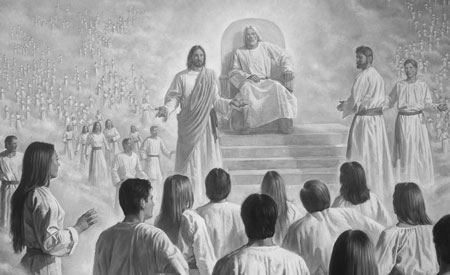
Moses 4:1–4. Satan and His Opposition to Heavenly Father’s Plan
In
the premortal existence, Satan was called “Lucifer,” which means “the
Shining One” or “Lightbringer.” He was a “son of the morning” (see Isaiah 14:12; D&C 76:25–27) and had potential to do much good. But Lucifer sought to obtain the throne, honor, power, and glory of Heavenly Father (see D&C 29:36; 76:28; Moses 4:1). To do so, he proposed to “redeem all mankind, that one soul shall not be lost” (Moses 4:1).
However, his proposal was based on compulsion and would therefore
eliminate the agency of Heavenly Father’s children and the need for a
Savior to suffer and redeem them.
Moses 4:3. The Agency of Man
Elder
Dallin H. Oaks, a member of the Quorum of the Twelve Apostles, said:
“Satan’s method of assuring ‘that one soul shall not be lost’ (Moses 4:1) would be to ‘destroy the agency of man’ (Moses 4:3). Under his plan, Satan would have been our master, and he would have ‘[led us] captive at his will’ (Moses 4:4). Without the power of choice, we would have been mere robots or puppets in his hands” (“Free Agency and Freedom,” in The Book of Mormon: Second Nephi, The Doctrinal Structure, ed. Monte S. Nyman and Charles D. Tate Jr. [1989], 4).
Moses 4:4. Satan’s Desires
President
Joseph F. Smith taught: “Let it not be forgotten that the evil one has
great power in the earth, and that by every possible means he seeks to
darken the minds of men and then offers them falsehood and deception in
the guise of truth. Satan is a skillful imitator, and as genuine gospel
truth is given the world in ever-increasing abundance, so he spreads the
counterfeit coin of false doctrine. Beware of his spurious currency, it
will purchase for you nothing but disappointment, misery and spiritual
death” (“Witchcraft,” Juvenile Instructor, 15 Sept. 1902, 562).
President
Brigham Young said: “Every person who desires and strives to be a Saint
is closely watched by fallen spirits that came here when Lucifur [sic]
fell, and by the spirits of wicked persons who have been here in
tabernacles and departed from them. … Those spirits are never idle; they
are watching every person who wishes to do right, and are continually
prompting them to do wrong” (in Journal of Discourses, 7:239).
Moses 4:6. Satan Does Not Know the Mind of God
Elder
James E. Talmage explained that Satan actually “furthered the purposes
of the Creator by tempting Eve; yet his design was to thwart the Lord’s
plan. We are definitely told that ‘he knew not the mind of God,
wherefore he sought to destroy the world.’ [Moses 4:6.]
Yet his diabolical effort, far from being the initiatory step toward
destruction, contributed to the plan of man’s eternal progression” (The Articles of Faith, 69).
Moses 4:7–19
The Fall of Adam and Eve
Moses 4:10. “Ye Shall Not Surely Die”
God
told Adam that he would die if he ate the fruit of the tree of
knowledge of good and evil. Satan’s statement that Adam would not die
was an evil exploitation and illustrates the pernicious nature of Satan,
“the father of all lies” (Moses 4:4), for he attempted to show God as a liar. But God is a God of truth and cannot lie (see Ether 3:12).
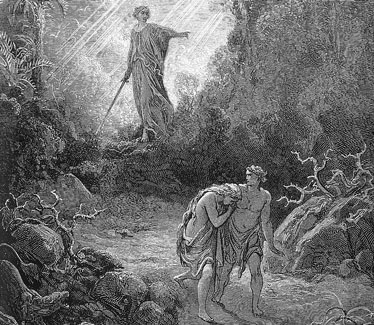
Soon after Adam and Eve partook of the forbidden fruit, they were
forced to leave the garden and the presence of the Lord, thus suffering a
spiritual death. Additionally, when they fell, their bodies changed
from a nonmortal state to a mortal state and thus became subject to
physical death. (See D&C 29:40–43.)
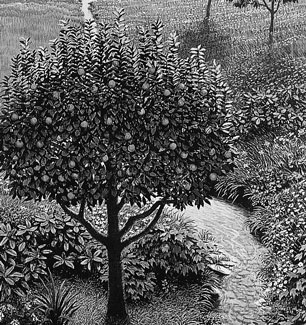
Moses 4:11. “Ye Shall Be As Gods, Knowing Good and Evil”
When
Adam and Eve partook of the fruit they became mortal and, in the sense
of knowing good and evil, began to become like God. But Satan implied
that God’s forbidding them to partake of the fruit was because God did
not want them to become as the Gods, trying to make it appear that God’s
motives were selfish. The truth is that God’s work and glory is to help
all of His children to one day become as He is (see Moses 1:39).
Moses 4:12. Why Did Adam and Eve Partake of the Fruit?
Neither
Adam nor Eve partook of the fruit because they loved Satan more than
God or because they wanted to rebel against God. Elder Dallin H. Oaks
taught:
“It
was Eve who first transgressed the limits of Eden in order to initiate
the conditions of mortality. Her act, whatever its nature, was formally a
transgression but eternally a glorious necessity to open the doorway
toward eternal life. Adam showed his wisdom by doing the same. And thus
Eve and ‘Adam fell that men might be’ [2 Nephi 2:25].
“Some
Christians condemn Eve for her act, concluding that she and her
daughters are somehow flawed by it. Not the Latter-day Saints! Informed
by revelation, we celebrate Eve’s act and honor her wisdom and courage
in the great episode, called the Fall. … Brigham Young declared, ‘We
should never blame Mother Eve, not the least’ (in Journal of Discourses,
13:145). Elder Joseph Fielding Smith said: ‘I never speak of the part
Eve took in this fall as a sin, nor do I accuse Adam of a sin. … This
was a transgression of the law, but not a sin … for it was something
that Adam and Eve had to do!’[Doctrines of Salvation, 1:114–15]” (in Conference Report, Oct. 1993, 98; or Ensign, Nov. 1993, 73).
Moses 4:12. The Difference between Transgression and Sin
Elder Dallin H. Oaks said that the “contrast between a sin and a transgression reminds us of the careful wording in the second article of faith: ‘We believe that men will be punished for their own sins, and not for Adam’s transgression’
(italics added). It also echoes a familiar distinction in the law. Some
acts, like murder, are crimes because they are inherently wrong. Other
acts, like operating without a license, are crimes only because they are
legally prohibited. Under these distinctions, the act that produced the
Fall was not a sin—inherently wrong—but a transgression—wrong because
it was formally prohibited. These words are not always used to denote
something different, but this distinction seems meaningful in the
circumstances of the Fall” (in Conference Report, Oct. 1993, 98; or Ensign, Nov. 1993, 73).
Another meaning of the word transgress
is “to go beyond established limits or conditions.” Adam and Eve went
beyond the limits that would have kept them in the Garden of Eden
forever, and in so doing helped provide the opportunity of mortality for
all of us.
Moses 4:14. Adam and Eve Tried to Hide from God
Moses 3:25
tells us that before the Fall Adam and Eve were not ashamed, despite
their nakedness. Once they gained knowledge of good and evil, they
became conscious of their disobedience and unworthiness before God. It
may be said that they became aware and ashamed of their spiritual
“nakedness.” As fallen beings, they had to face God with a sense of
their own guilt. As Alma explained to his son Corianton, “Ye cannot hide
your crimes from God; and except ye repent they will stand as a
testimony against you at the last day” (Alma 39:8; see also 2 Nephi 9:14).
Moses 4:15–19. God Asked Adam and Eve If They Had Eaten the Fruit
God “knoweth all things, and there is not anything save he knows it” (2 Nephi 9:20). Why then did God ask Adam and Eve the questions in Moses 4:15–19? Because, as Elder Bruce R. McConkie taught, “personal accountability for all of one’s acts underlies the whole gospel plan and is the natural outgrowth of the law of free agency” (Mormon Doctrine, 15).
Moses 4:20–32
The Consequences of the Fall
Moses 4:20. The Serpent Was Cursed
Elder
Bruce R. McConkie wrote: “Since the day in which Satan spoke by the
mouth of the serpent to entice Eve to partake of the forbidden fruit (Moses 4:5–21), Satan has been called ‘that old serpent.’ (Rev. 12:9; 20:2; D&C 76:28; 88:110.) Choice of the name is excellent, indicating as it does a cunning, sly, subtle, and deceitful craftiness” (Mormon Doctrine, 704).
“Being
cursed is the very opposite of being blessed; God’s blessing graciously
invokes good, whereas his curse justly invokes evil upon one deserving
it. Thus Satan was informed through symbolic terms that he would not
have the privilege of earth life that even cattle and beasts have”
(Ellis T. Rasmussen, A Latter-day Saint Commentary on the Old Testament [1993], 16).
Moses 4:21. Enmity
President Ezra Taft Benson taught: “Enmity means ‘hatred toward, hostility to, or a state of opposition’” (in Conference Report, Apr. 1989, 3; or Ensign, May 1989, 4).
Moses 4:21. The “Seed of the Woman” Refers to the Savior, Jesus Christ
Elder
James E. Talmage wrote: “Adam, the patriarch of the race, rejoiced in
the assurance of the Savior’s appointed ministry, through the acceptance
of which, he, the transgressor, might gain redemption. Brief mention of
the plan of salvation, the author of which is Jesus Christ, appears in
the promise given of God following the fall—that though the devil,
represented by the serpent in Eden, should have power to bruise the heel
of Adam’s posterity, through the seed of the woman should come the
power to bruise the adversary’s head. It is significant that this
assurance of eventual victory over sin and its inevitable effect, death,
both of which were introduced to earth through Satan, the arch-enemy of
mankind, was to be realized through the offspring of woman; the promise
was not made specifically to the man, nor to the pair. The only
instance of offspring from woman dissociated from mortal fatherhood is
the birth of Jesus the Christ, who was the earthly Son of a mortal
mother, begotten by an immortal Father. He is the Only Begotten of the
Eternal Father in the flesh, and was born of woman.” (Jesus the Christ, 3rd ed. [1916], 43).
Moses 4:22. “I Will Greatly Multiply thy Sorrow”
The Hebrew word for “multiply” is rabah (raw-bah), meaning to repeat over and over. It does not suggest greater sorrow, but rather repeated sorrow. The Hebrew word for “sorrow” in the Genesis account (Genesis 3:16) is from atsab
(aw-tsab), which means “labor” or “pain.” While these words suggest
that toil and suffering would be a part of Eve’s life, Eve did not view
the conditions that came upon her through the Fall to be a curse (see Moses 5:11). Moses 4:22“is
a great revelation to women. Eve and her daughters can become
cocreators with God by preparing bodies for his spirit children to
occupy on earth and later in eternity. Mothering would entail
inconvenience, suffering, travail, and sorrow; these the Lord foretold
as natural consequences and not as a curse” (Rasmussen, Latter-day Saint Commentary, 17).
Moses 4:22. “He Shall Rule over Thee”
Concerning this phrase, President Spencer W. Kimball said: “I have a question about the word rule. It gives the wrong impression. I would prefer to use the word preside because that’s what he does. A righteous husband presides over his wife and family” (Ensign, Mar. 1976, 72). In Ephesians 5:22–31 and Doctrine and Covenants 121:41–46 the Lord gave clear instructions on how husbands should preside.
Moses 4:23–25. “Cursed Shall Be the Ground for Thy Sake”
President
Marion G. Romney taught: “Note that the curse was not placed upon Adam,
but upon the ground for Adam’s sake. Rather than a curse upon Adam, it
was a blessing to him” (in Conference Report, Oct. 1976, 168; or Ensign, Nov. 1976, 125).
President
Brigham Young said that the effects of the Fall were universal: “Then
came the curse upon the fruit, upon the vegetables, and upon our mother
earth; and it came upon the creeping things, upon the grain in the
field, the fish in the sea, and upon all things pertaining to this
earth” (in Journal of Discourses, 10:312).
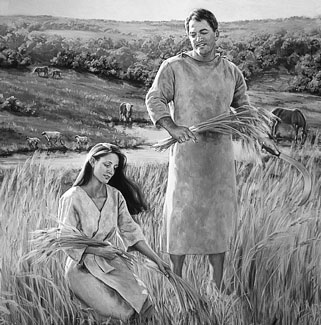
From the time of the Fall, thorns and thistles have grown spontaneously
from the ground. Only through persistent labor could Adam plant,
nourish, and harvest crops from the ground and thereby assure his
survival. Before the Fall, he had been charged to “dress” and “keep” the
Garden of Eden (Moses 3:15). After the Fall, he was told that he would have to work by the sweat of his brow to obtain his sustenance.
Moses 4:23. “In Sorrow Shalt Thou Eat of It All the Days of Thy Life”
“If Eve must labor to bring forth, so too must Adam labor (Genesis 3:17–19; Moses 4:23)
to quicken the earth so it shall bring forth. Both of them bring forth
life with sweat and tears, and Adam is not the favored party. If his
labor is not as severe as hers, it is more protracted. For Eve’s life
will be spared long after her childbearing—‘nevertheless thy life shall
be spared’—while Adam’s toil must go on to the end of his days: ‘In
sorrow shalt thou eat of it all the days of thy life’! Even retirement is no escape from that sorrow” (Hugh Nibley, Old Testament and Related Studies, John W. Welch, Gary P. Gillum, and Don E. Norton, eds. [1986], 90).
Moses 4:25. Death Entered the World
Pointing out the falseness of what Satan had said to Eve (see Moses 4:10), the Lord told Adam, “Thou shalt surely die” (v. 25). Adam and Eve experienced a spiritual
death when they were driven from the Garden of Eden and from the
presence of the Lord. They also became mortal and thus subject to physical death.
Moses 4:27. God Made Coats of Skins for Adam and Eve
The phrase “coat of skins” could also have been rendered “garments” or “tunics” (see Genesis 3:21, footnote a, in the LDS edition of the King James Bible).
Moses 4:31. Cherubim
Cherubim
are “figures representing heavenly creatures, the exact form being
unknown. They are found in the Holy of Holies, on the Mercy Seat of the
Ark (Ex. 25:18, 22; 1 Kgs. 6:23–28; Heb. 9:5), and in the visions of Ezekiel (Ezek. 10; 11:22)” (Bible Dictionary, “cherubim,” 632).
Moses 5:1–15
Adam and Eve Were Taught the Gospel
Moses 5:1–2. Adam and Eve Labored Together
The significance of Moses 5:1–2
is profound in light of the many attacks and challenges being made
today regarding marriage and family relationships. In their proclamation
to the world regarding the family, the First Presidency and Quorum of
the Twelve Apostles stated:
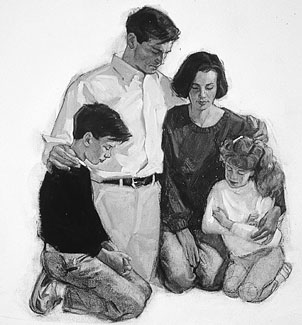
“Husband
and wife have a solemn responsibility to love and care for each other
and for their children. ‘Children are an heritage of the Lord’ (Psalm 127:3).
Parents have a sacred duty to rear their children in love and
righteousness, to provide for their physical and spiritual needs, to
teach them to love and serve one another, to observe the commandments of
God and to be law-abiding citizens wherever they live. …
“… Successful
marriages and families are established and maintained on principles of
faith, prayer, repentance, forgiveness, respect, love, compassion, work,
and wholesome recreational activities. By divine design, fathers are to
preside over their families in love and righteousness and are
responsible to provide the necessities of life and protection for their
families. Mothers are primarily responsible for the nurture of their
children. In these sacred responsibilities, fathers and mothers are
obligated to help one another as equal partners” (Ensign, Nov. 1995, 102; italics added).
Moses 5:5. “The Firstlings of Their Flocks”
“The
word ‘firstlings’ puts certain qualifications and restrictions and even
determines the quality of faith that is used in offering the sacrifice.
‘Firstling’ does not necessarily denote the oldest of the flock, but
the firstborn of its particular mother. A ‘firstling’ is a male, the
‘first to open the matrix’ of its mother (Ex. 13:2; 34:19).
Each mother in her lifetime could produce only one firstling, but a
flock of sheep could have several firstlings born each year. In order to
know which lambs were acceptable for sacrifice, the owner would have to
know his flock. Some notice would have to be made of mothers and of
young. Otherwise, how could anyone know which mothers had produced
offspring for the first time? There is no way that a man, Adam or anyone
else, could know which males were firstlings unless a record and some
identification of mothers and offspring were kept. This requirement
removes the element of chance and of haphazard obedience, or sometime
obedience. Not only is one’s faith shown in the willingness to offer a
sacrifice but also in the care required and the preparation needed
beforehand in making the selection of the proper animal.
“This
particular passage of scripture illustrates the concept that the
commandments of God require the intelligent and deliberate attention of
those who are seeking salvation. It gives a reason for Paul’s
observation that ‘without faith it is impossible to please’ God (Heb. 11:6).
For without faith one would not have kept a record and marked (at least
mentally) which animals were proper for sacrifice” (Robert J. Matthews,
“The Doctrine of the Atonement,” in Studies in Scripture, Volume Two: The Pearl of Great Price, ed. Robert L. Millet and Kent P. Jackson [1985], 118–19).
Moses 5:5–6. Adam and Eve Were Obedient
President David O. McKay said: “Let us never lose sight of the principles of obedience. Obedience is heaven’s first law” (Gospel Ideals [1953], 484). President Ezra Taft Benson taught, “The great test of life is obedience to God” (in Conference Report, Apr. 1988, 3; or Ensign, May 1988, 6).
Elder
Henry D. Taylor, who was an Assistant to the Quorum of the Twelve
Apostles, said: “I like the beautiful lesson taught and the impressive
example set by our first parent, Father Adam. He was commanded by the
Lord to offer the firstlings of his flocks as a sacrifice. He did not
know the reason for the request, but without hesitation he was obedient
to the commandment: ‘And after many days an angel of the Lord appeared
unto Adam, saying: Why dost thou offer sacrifices unto the Lord?’ Adam
responded with this magnificent, trusting reply: ‘I know not, save the
Lord commanded me.’ (Moses 5:5–6.)
To Adam it was not a matter of blind obedience, but rather it displayed
his complete and unwavering confidence and faith in the word and
instruction from the Lord” (“Faith,” Improvement Era, Dec. 1970, 44).
Moses 5:5–8. Animal Sacrifice
The
elements of animal sacrifice pointed to the Atonement of Jesus Christ.
Elder Bruce R. McConkie taught: “From Adam to Moses, and from Moses to
the coming of the Lord Jesus Christ in the flesh, either as part of the
gospel or of the Mosaic law, as the cases might be, all of the saints
offered sacrifices in similitude of the sacrifice of the Lamb of God. …
For a pastoral people whose lives depended on their flocks and herds,
there could have been no better similitude than this” (A New Witness for the Articles of Faith, 114–15).
Moses 5:8. Adam and Eve Were Taught the Importance of the Name of Christ
“One of the most important concepts of [Moses 5:8]
is the clear declaration that Adam was to do all that he did ‘in the
name of the Son,’ to repent, and ‘call upon God in the name of the Son
forevermore.’ This is the same doctrine taught in many other passages,
of which the following are a few: [Acts 4:12; 2 Nephi 31:20–21; Mosiah 3:17; 4:8; D&C 18:23–24; Moses 6:52].
“Thus
we see that this most fundamental of all doctrines—that there is only
one plan of salvation, with only one Savior—was taught to Adam right
from the start. These passages also specify that there were no alternate
plans nor alternate saviors” (Matthews, in Studies in Scripture, Volume Two, 119–20).
The
Prophet Joseph Smith said: “Some say the kingdom of God was not set up
on the earth until the day of Pentecost, and that John [the Baptist] did
not preach the baptism of repentance for the remission of sins. But I
say, in the name of the Lord, that the kingdom of God was set up on the
earth from the days of Adam to the present time, whenever there has been
a righteous man on earth unto whom God revealed His word and gave power
and authority to administer in His name” (Teachings of the Prophet Joseph Smith, 271).
Moses 5:10–11. Adam and Eve Believed in Jesus Christ
Adam
knew that “in the flesh,” or as a resurrected being, he would see God.
Eve testified of the joy of their redemption. She knew that through
Christ’s Atonement they would receive eternal life if they remained
obedient.
For more on joy, see 2 Nephi 2:25. For more on resurrection, see 2 Nephi 9:6–14. The benefits Adam and Eve received because of their Fall and the Atonement of Jesus Christ are summarized in 2 Nephi 2:22–28.
Moses 5:13. “And Satan Came among Them”
President
Ezra Taft Benson, then President of the Quorum of the Twelve Apostles,
said: “Whenever the God of Heaven establishes by revelation his design,
Satan always comes among men to pervert the doctrine, saying, ‘Believe
it not.’ He often establishes a counterfeit system, designed to deceive
the children of men” (“A Vision and a Hope for the Youth of Zion,” 1977 Devotional Speeches of the Year [1978], 75).
Moses 5:13. “Carnal, Sensual, and Devilish”
Elder Bruce R. McConkie wrote: “After the fall of Adam, man became carnal, sensual, and devilish by nature; he became fallen man. (Moses 5:13; 6:49; Mosiah 16:1–4; Alma 42:10; D&C 20:20.)
All accountable persons on earth inherit this fallen state, this
probationary state, this state in which worldly things seem desirable to
the carnal nature. Being in this state, ‘the natural man is an enemy to
God,’ until he conforms to the great plan of redemption and is born
again to righteousness. (Mosiah 3:19.) Thus all mankind would remain lost and fallen forever were it not for the atonement of our Lord. (Alma 42:4–14.)” (Mormon Doctrine, 267–68).
The following quotations from Elder McConkie help us understand the terms carnal, sensual, and devilish:
- • “In this fallen state [all men] are subject to the lusts, passions, and appetites of the flesh. They are spiritually dead, having been cast out of the presence of the Lord; and thus ‘they are without God in the world, and they have gone contrary to the nature of God.’ They are in a ‘carnal state’ (Alma 41:10–11); they are of the world. Carnality connotes worldliness, sensuality, and inclination to gratify the flesh” (Mormon Doctrine, 113).
- •“That which is sensual is carnal and base; it relates to the body rather than the Spirit. Thus sensuality embraces free indulgence in sensual, fleshly pleasures—lewdness, licentiousness, lasciviousness. Since the fall, men in their natural state have been carnal, sensual, and devilish” (702).
- •“Any persons over whom the devil has power, who subject themselves to him, who submit to his enticements (following the carnal and sensual allurements of the world), are devilish” (195).
Moses 5:16–54
Cain Loved Satan More Than God
Moses 5:16–17. Cain and Abel
Elder Joseph Fielding Smith, then a member of the Quorum of the Twelve Apostles, taught:
“Cain
had the great honor of being Adam’s son, and he, too, was privileged
with the same blessings as his father. What a mighty man he could have
been! How his name might have stood out with excellent luster as that of
one of the valiant sons of God! How he might have been honored to the
latest generation! But he would have none of it!
“Cain’s
great sin was not committed in ignorance. We have every reason to
believe that he had the privilege of standing in the presence of
messengers from heaven. In fact the scriptures infer that he was blessed
by communication with the Father and was instructed by messengers from
his presence. No doubt he held the Priesthood; otherwise his sin could
not make of him Perdition. He sinned against the light. And this he did,
so we are told, because he loved Satan more than he loved God.
“From
the Bible one might infer that Cain was the first born child of Adam,
but the Bible gives only a meager history. In the Book of Moses we
obtain a more extended view and a better insight into conditions in that
early day. Adam and Eve were the parents of numerous children, sons and
daughters, even before Cain and Abel were born, as we gain the
information from that story” (The Way to Perfection, 97–98).
The
Prophet Joseph Smith taught that Abel “magnified the Priesthood which
was conferred upon him, and died a righteous man, and therefore has
become an angel of God by receiving his body from the dead, holding
still the keys of his dispensation” (Teachings of the Prophet Joseph Smith, 169).
Moses 5:18–21. Cain Made an Offering
The
Prophet Joseph Smith taught: “By faith in this atonement or plan of
redemption, Abel offered to God a sacrifice that was accepted, which was
the firstlings of the flock. Cain offered of the fruit of the ground,
and was not accepted, because he could not do it in faith, he could have
no faith, or could not exercise faith contrary to the plan of heaven.
It must be shedding the blood of the Only Begotten to atone for man; for
this was the plan of redemption; and without the shedding of blood was
no remission; and as the sacrifice was instituted for a type, by which
man was to discern the great Sacrifice which God had prepared; to offer a
sacrifice contrary to that, no faith could be exercised, because
redemption was not purchased in that way, nor the power of atonement
instituted after that order; consequently Cain could have no faith; and
whatsoever is not of faith, is sin” (Teachings of the Prophet Joseph Smith, 58).
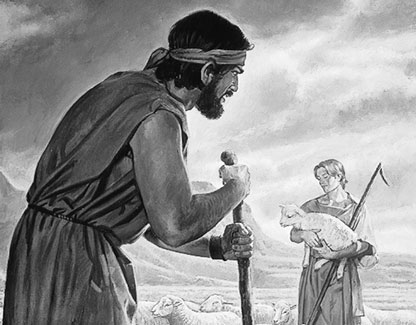
Moses 5:21–22. “Why Is Thy Countenance Fallen?”
One meaning of countenance is the expression on a person’s face, which may reveal the mood, emotion, or feelings of the heart.
Moses 5:23–26. Cain Exercised His Agency and Chose to Rebel against God.
President
Joseph F. Smith taught: “God has given to all men an agency and has
granted to us the privilege to serve him or serve him not, to do that
which is right or that which is wrong, and this privilege is given to
all men irrespective of creed, color or condition. The wealthy have this
agency, the poor have this agency, and no man is deprived by any power
of God from exercising it in the fullest and in the freest manner. This
agency has been given to all. This is a blessing that God has bestowed
upon the world of mankind, upon all his children alike. But he will hold
us strictly to an account for the use that we make of this agency, and
as it was said of Cain, so it will be said of us; ‘If thou doest well,
shalt thou not be accepted? and if thou doest not well, sin lieth at the
door’ (Gen. 4:7).
There are, however, certain blessings which God bestows upon the
children of men only upon the condition of the rightful exercise of this
agency” (Gospel Doctrine, 5th ed. [1939], 49).
Moses 5:23–30. Will Cain Rule over Satan?
The Prophet Joseph Smith taught that “all beings who have bodies have power over those who have not” (Teachings of the Prophet Joseph Smith,
181). Elder Bruce R. McConkie said: “As Adam represented the Lord on
earth, so Cain acted for and on behalf of Lucifer. Indeed, this first
murderer of all murderers is himself Perdition—he was so designated in
preexistence—and he will rule over Satan himself when the devil and his
angels are cast out everlastingly” (A New Witness For the Articles of Faith, 658).
Moses 5:24–25. Cain Would Be Called “Perdition”
Perdition means “a perishing
destruction” or “lost.” Elder Bruce R. McConkie wrote: “Two persons,
Cain and Satan, have received the awesome name-title Perdition.
The name signifies that they have no hope whatever of any degree of
salvation, that they have wholly given themselves up to iniquity, and
that any feeling of righteousness whatever has been destroyed in their
breasts” (Mormon Doctrine, 566; see also D&C 76:30–38, 43–49).
Moses 5:29–31. Cain and Satan Covenanted with Each Other
Cain
was the first man on earth to enter into a covenant with Satan and to
use covenants to prevent others from disclosing sinful acts. However, he
was not the last. In the scriptures this kind of covenant relationship
is called a secret combination. For more on the history of secret
combinations, see Helaman 6:21–30; Ether 8:13–25.
Moses 5:32. Cain Slew Abel
In
1885 the First Presidency made the following statement, speaking about
the righteous who are afflicted by the wicked: “For a wise purpose in
[God’s] providence He permits the wicked, in the exercise of their
agency, from time to time to afflict His followers. Since the days of
our father Adam this has always been the case, and it will continue to
be, so long as Satan has any power over the hearts of the children of
men” (in James R. Clark, comp., Messages of the First Presidency of The Church of Jesus Christ of Latter-day Saints, 6 vols. [1965–75], 3:5; see also Alma 14:8–11).
Moses 5:33. “I Am Free”
Cain’s
rejoicing is both ironic and tragic, manifesting how complete his
rebellion against God had become. Did he think he was free from future
work? (see Moses 4:23–31). Did he consider himself free from the righteous example of Abel? (see 1 John 3:12).
Or did he feel he was free because he was rich? The scriptures make it
clear that instead of true freedom, Cain was in total bondage and
damnation (see 2 Nephi 2:27).
Moses 5:34. “Am I My Brother’s Keeper?”
Elder Dallin H. Oaks said:
“Are
we our brothers’ keepers? In other words, are we responsible to look
after the well-being of our neighbors as we seek to earn our daily
bread? The Savior’s Golden Rule says we are. Satan says we are not.
“Tempted
of Satan, some have followed the example of Cain. They covet property
and then sin to obtain it. The sin may be murder, robbery, or theft. It
may be fraud or deception. It may even be some clever but legal
manipulation of facts or influence to take unfair advantage of another.
Always the excuse is the same: ‘Am I my brother’s keeper?’” (in
Conference Report, Oct. 1986, 25; or Ensign, Nov. 1986, 20).
Moses 5:36–39. Cain Was Cursed
Part
of the curse Cain received for killing Abel was that the ground would
no longer “yield unto [Cain] her strength,” and that he would be a
“fugitive and a vagabond” (Moses 5:37).
A fugitive is a person who is running from the law, and a vagabond is
someone who has no home. Cain was also driven out “from the face of the
Lord” (Moses 5:39).
The Prophet Joseph Smith said: “The power, glory and blessings of the
Priesthood could not continue with those who received ordination only as
their righteousness continued; for Cain also being authorized to offer
sacrifice, but not offering it in righteousness, was cursed. It
signifies, then, that the ordinances must be kept in the very way God
has appointed; otherwise their Priesthood will prove a cursing instead
of a blessing” (Teachings of the Prophet Joseph Smith, 169).
Moses 5:39–40. A Mark Was Placed upon Cain
It must be noted that the mark that was set upon Cain was not the same thing as the curse
that he received. The mark was to distinguish him as the one who had
been cursed by the Lord. It was placed upon Cain so that no one finding
him would kill him. A parallel that illustrates the difference between a
mark and a curse might be the account of the Lord placing a mark and a
curse upon the Lamanites and their posterity (see 2 Nephi 5:20–24; Alma 23:16–18).
It should be noted that the curse was based on individual disobedience
and that by obedience to God the curse was removed, although the mark
may not have been removed immediately. Eventually, however, the mark was
also removed from some (see 3 Nephi 2:12–16).
Moses 5:55–59
The Gospel Was Preached From the Beginning
Moses 5:55. Who Were the “Sons of Men”?
The sons of men were the wicked, in contrast to the sons of God, who were the covenant followers of God (see also Moses 8:13–15).
Moses 5:58. How Were Adam and Eve Taught the Gospel?
After
the Fall, God revealed the plan of salvation to Adam and Eve so they
would know how to return to His presence and have eternal life. Moses 5:4–9 explains that God gave the gospel to Adam and Eve by His own voice, through angels, and by the Holy Ghost. (See also Alma 12:27–33.)
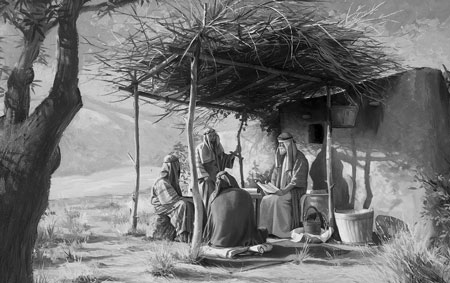
Moses 5:59. “All Things Were Confirmed unto Adam, by an Holy Ordinance”
In Webster’s 1828 American Dictionary of the English Language (which reflects usage in the Prophet Joseph Smith’s day) the word confirmed
is defined as “made more firm; strengthened; or established.” Elder
Boyd K. Packer said: “Ordinances and covenants become our credentials
for admission into [God’s] presence. To worthily receive them is the
quest of a lifetime; to keep them thereafter is the challenge of
mortality” (in Conference Report, Apr. 1987, 27; or Ensign, May 1987, 24).
Moses 5:59. The Gospel Will Be in the World until the End
President
Wilford Woodruff said: “Now, any man acquainted with the Scriptures can
clearly understand that there is but one true Gospel. There never was
but one Gospel. Whenever that Gospel has been upon the earth it has been
the same in every dispensation. The ordinances of the Gospel have never
been changed from the days of Adam to the present time, and never will
be to the end of time. While there were many sects and parties in
existence in the early times, Jesus gave his disciples to understand
that there was but one Gospel. He told them what it was. He declared
unto them its ordinances” (in Journal of Discourses, 24:239–40).
Moses 6:1–25
The Generations of Adam
Moses 6:2. Who Was Seth?
Abel
had been chosen to carry the responsibilities of the priesthood to
succeeding generations. But after he was murdered, Seth, who was born
130 years after the Fall of Adam and Eve, was selected as the chosen son
to carry this sacred priesthood responsibility (see D&C 107:40–42).
He was ordained when he was 69 years old and lived a total of 912
years. The scriptures refer to him as a “perfect man, and his likeness
was the express likeness of his father” (see D&C 107:43).
Moses 6:5–6. The Origin of Language and Writing
Elder Bruce R. McConkie stated:
“In the beginning God gave Adam a language that was pure, perfect, and undefiled. This Adamic language,
now unknown, was far superior to any tongue which is presently extant.
For instance, the name of God the Father, in this original language, is Man of Holiness, signifying that he is a Holy Man and not a vague spiritual essence. (Moses 6:57.)
“This
first language spoken by mortals was either the celestial tongue of the
Gods or such adaptation of it as was necessary to meet the limitations
of mortality; and Adam and his posterity had power to speak, read, and
write it” (Mormon Doctrine, 19).
Elder McConkie said the following about the book of remembrance mentioned in Moses 6:5:
“From the beginning, the Lord provided a language and gave men the
power to read and write. … The thing which they first wrote, and which
of all their writings was of the most worth unto them, was a Book of
Remembrance, a book in which they recorded what the Lord had revealed
about himself, about his coming, and about the plan of salvation, which
plan would have force and validity because of his atonement. This was
the beginning of the Holy Scriptures” (The Promised Messiah, 86; see also Moses 6:46).
Moses 6:7. How Long Has the Priesthood Been on Earth?
The priesthood “is without beginning of days or end of years” (D&C 84:17). From the time of Adam and Eve, the priesthood, the gospel, and the ordinances were available as we have them today (see Moses 5:58–59; see also D&C 107:40–42). The Prophet Joseph Smith taught:
“The
Priesthood was first given to Adam; he obtained the First Presidency,
and held the keys of it from generation to generation. He obtained it in
the Creation, before the world was formed. …
“The
Priesthood is an everlasting principle, and existed with God from
eternity, and will to eternity, without beginning of days or end of
years. The keys have to be brought from heaven whenever the Gospel is
sent. When they are revealed from heaven, it is by Adam’s authority” (Teachings of the Prophet Joseph Smith, 157).
Moses 6:8–25. The Patriarchal Organization of the Priesthood
There
were twenty generations of the priesthood from Adam to Abraham, being
passed from father to son. Eight generations are listed in Moses 6:8–25(from Adam to Methuselah); in Moses 8:5–12, three more generations (Lamech, Noah, and Shem) are given, and Genesis 11:10–26 records the nine generations from Shem to Abram (Abraham). (See also D&C 107:40–52.)
Moses 6:17. “A Land of Promise”
This
verse mentions the earliest righteous people (“the people of God”) who
moved from a land filled with wickedness to a land of promise (see also Moses 6:40–41). This is a pattern that is repeated many times in scripture (for example, see 1 Nephi 1–18; Omni 1:12–19; Ether 1–4).
Moses 6:26–47
Enoch’s Call and Work
Moses 6:26. Enoch
The Bible contains only a few verses about Enoch (see Genesis 5:19–24). The book of Moses greatly increases our understanding of Enoch’s life, ministry, and teachings: Moses 6:26–36
tells of Enoch’s call, verses 37–47 record his words against the works
of men, verses 48–68 contain his message of salvation, and Moses 7
is a record of his remarkable visions of God and of future events on
this earth. Enoch was the seventh generation from Adam. He was born 620
years after the Fall, was ordained to the priesthood at 25 years of age,
and at 430 years old he and his people were taken into heaven without
tasting death (see D&C 107:49). An additional quotation from the prophecies of Enoch is found in Jude 1:14–15, and more information on his life is found in Luke 3:37 and Hebrews 11:5.
Moses 6:29. What Is the Meaning of “a Hell I Have Prepared”?
Because
of the wickedness of the people in the days of Enoch, the Lord called
upon Enoch to preach repentance. The Lord told Enoch, “A hell I have
prepared for them, if they repent not.” This “hell” refers to the part
of the spirit world known as the spirit prison where the wicked suffer
torment because of their unrepented sins (see Alma 40:11–14).
Moses 6:31–32. Feelings of Inadequacy
Enoch was not the only prophet who felt inadequate when the Lord called him. Read about Moses’ and Jeremiah’s reactions in Exodus 4:10–12 and Jeremiah 1:4–9.
Elder James E. Faust, then a member of the Quorum of the Twelve
Apostles, taught: “Most of us who are called to leadership in the Church
feel that we are inadequate because of inexperience, lack of ability,
or meager learning and education” (in Conference Report, Oct. 1980, 52;
or Ensign, Nov. 1980, 36; see also 1 Corinthians 1:26–27; Ether 12:23–27; D&C 1:19–20; 33:8–10).
Moses 6:35–36. Enoch Was a Seer
Elder
John A. Widtsoe stated: “A seer is one who sees with spiritual eyes. He
perceives the meaning of that which seems obscure to others; therefore
he is an interpreter and clarifier of eternal truth. He foresees the
future from the past and the present. This he does by the power of the
Lord operating through him directly, or indirectly with the aid of
divine instruments such as the Urim and Thummim” (Evidences and Reconciliations, 258; see also Mosiah 8:13–18).
Moses 6:48–56
Enoch Preached the Plan of Salvation
Moses 6:48–50. “By His Fall Came Death”
Because
of Adam’s Fall, all mankind suffer physical death (the separation of
the immortal spirit from the mortal body) and spiritual death
(separation from the presence of God). Furthermore, because people yield
to the temptations of Satan, they become “carnal, sensual, and
devilish, and are shut out from the presence of God” until they repent (Moses 6:49).
The good news of the plan of salvation is that through the Atonement of
Jesus Christ all mankind will overcome physical death and can overcome
spiritual death (see Romans 3:23; Mosiah 16:3–4; Alma 11:42–43; Helaman 14:14–18; Moses 6:52).
Moses 6:53–54. What Does “Original Guilt” Mean?
Elder
Neal A. Maxwell explained: “We are not haunted with an overhanging
sense of ‘original sin’ about which we can do nothing. (Moses 6:54; Moroni 8:15–16.) By revelation, we know that the Lord told Adam: ‘Behold I have forgiven thee thy transgression in the Garden of Eden.’ (Moses 6:53.) Thus, we are accountable for our ‘own sins, and not for Adam’s transgression’ (Article of Faith 2.)” (Meek and Lowly [1987], 42–43).
Moses 6:55. What Does “Thy Children Are Conceived in Sin” Mean?
Elder Bruce R. McConkie indicated that the phrase “conceived in sin” means “born into a world of sin” (see A New Witness for the Articles of Faith, 101).
Moses 6:56. Moral Agency: A Gift of God
God gave us the great gift of agency in the day He created us (see Moses 7:32). Moral agency enables us to choose between good and evil and to experience the consequences of our choices (see 2 Nephi 2:14–16, 25–29; D&C 101:78).
Moses 6:57–68
Enoch Saw that Adam and Eve Were Baptized
Moses 6:59. Water, Blood, and Spirit
Elder Bruce R. McConkie explained:
“Two
births are essential to salvation. Man cannot be saved without birth
into mortality, nor can he return to his heavenly home without a birth
into the realm of the Spirit. … The elements present in a mortal birth
and in a spiritual birth are the same. They are water, blood, and
spirit. Thus every mortal birth is a heaven-given reminder to prepare
for the second birth. …
“In
every mortal birth the child is immersed in water in the mother’s womb.
At the appointed time the spirit enters the body, and blood always
flows in the veins of the new person. Otherwise, without each of these,
there is no life, no birth, no mortality.
“In
every birth into the kingdom of heaven, the newborn babe in Christ is
immersed in water, he receives the Holy Ghost by the laying on of hands,
and the blood of Christ cleanses him from all sin. Otherwise, without
each of these, there is no Spirit-birth, no newness of life, no hope of
eternal life. …
“… These
elements were again present in [Christ’s] death. He sweat great drops
of blood in Gethsemane as he took upon himself the sins of all men on
conditions of repentance. This same agony and suffering recurred on the
cross. It was then that he permitted his spirit to leave his body, and
it was then that blood and water gushed from his riven side” (A New Witness for the Articles of Faith, 288–89).
Moses 6:60. “By the Water”
“Baptism is not optional if one wishes the fullness of salvation. Jesus said a person must be born of water and of the Spirit (John 3:3–5).
When he sent the twelve apostles forth to teach the gospel he told them
that whosoever believed and was baptized would be saved; and whosoever
did not believe would be damned (Mark 16:16). …
“Baptism
in water has several purposes. It is for the remission of sins, for
membership in the Church, and for entrance into the celestial kingdom;
it is also the doorway to personal sanctification when followed by the
reception of the Holy Ghost” (Bible Dictionary, “baptism,” 619; see also D&C 76:51–52).
Moses 6:60. Justification
To
be justified is to be made just, or free from guilt and sin. The Holy
Ghost is the member of the Godhead whose power acts as a cleansing agent
that removes guilt and sin from our lives (see 2 Nephi 31:17).
President Joseph Fielding Smith said: “Through the shedding of the
blood of Christ, we are cleansed and sanctified; and we are justified,
through the Spirit of God” (Doctrines of Salvation, 2:324–25).
Moses 6:60. Sanctification
To be sanctified is to be holy and worthy of eternal life and immortal glory (see Moroni 10:32–33).
Through His perfect Atonement, Jesus Christ shed His blood and made it
possible for all who have faith and repent to be sanctified (see Mosiah 3:11, 18; Alma 34:10–16).
Thus, we are ransomed and made holy by the blood of Christ. President
Joseph Fielding Smith, then President of the Quorum of the Twelve
Apostles, taught:
“The
atonement by which men are redeemed, was made by one without blemish
and without spot. He had to be one who had life in himself, and
therefore all power over death. No mortal man could make the atonement.
Moreover, the atonement had to be made by the shedding of blood, for
blood is the vitalizing force of the mortal body. …
“The
Scriptures are replete with passages teaching us that there could be no
remission of sins without the shedding of the blood of Jesus Christ”
(in Conference Report, Apr. 1956, 127).
Moses 6:62. “This Is the Plan of Salvation”
Elder
Russell M. Nelson explained that the plan of salvation “is also called
the plan of happiness, … the plan of redemption, the plan of
restoration, the plan of mercy, the plan of deliverance, and the
everlasting gospel. Prophets have used these terms interchangeably.
“Regardless
of designation, the enabling essence of the plan is the atonement of
Jesus Christ” (in Conference Report, Oct. 1993, 45; or Ensign, Nov. 1993, 33).
Moses 6:63. All Things Are Made to Bear Record of Christ
In
the creation of the heavens and the earth, the Lord used physical
symbols to teach us doctrines and principles of Jesus Christ and His
gospel (see also 2 Nephi 11:4).
Understanding gospel symbols requires the uniting of an earthly or
concrete dimension with a transcendent, spiritual dimension. The prophet
Alma taught that “all things denote there is a God; yea, even the
earth, and all things that are upon the face of it, yea, and its motion,
yea, and also all the planets which move in their regular form do
witness that there is a Supreme Creator” (Alma 30:44). These things not only testify of the existence of a Supreme Being, but also that He is Jesus Christ, the Creator of all.
The Lord taught His disciples to look upon the contents of the scriptures and see things concerning Himself (see Luke 24:44–45).
To search for and discover symbols of Christ in the scriptures is to
open a wellspring of new thoughts and emotions relative to the
Atonement. For example, the earthly ordinance of baptism by immersion is
symbolic of the death, burial, and Resurrection of Christ (see Romans 6:3–5; D&C 76:51–52).
Moses 6:64–68. Adam, an Eternal Son of God
Enoch
showed how Adam set the example for all of us by exercising his faith
in Christ through baptism by water and the Spirit. Therefore, by his
obedience, Adam became “one in [Christ], a son of God” (Moses 6:68). In like manner, all may become sons and daughters of God (see Mosiah 5:7; 27:24–27; D&C 25:1; 39:4).
Moses 6:67. Adam Held the Priesthood
See the insights and commentary for Moses 6:7.
Moses 7:1–20
Enoch Led the People of God
Moses 7:3–4. Enoch Saw God Face-to-Face
Enoch had an experience similar to that of Moses and Abraham (see Moses 1:31; Abraham 3:11).
President Brigham Young added detail to this point: “Man is made in the
image of his Maker, … he is His exact image, having eye for eye,
forehead for forehead, eyebrows for eyebrows, nose for nose, cheekbones
for cheekbones, mouth for mouth, chin for chin, ears for ears, precisely
like our Father in heaven” (in Journal of Discourses, 13:146).
Moses 7:13. “Great Was the Faith of Enoch”
Enoch was told at the beginning of his ministry that he would do great things (see Moses 6:34).
Enoch’s faith in Jesus Christ enabled him to do those things. Elder
Bruce R. McConkie said: “Faith is power; by faith the worlds were made;
nothing is impossible to those who have faith. If the earth itself came
rolling into existence by faith, surely a mere mountain can be removed
by that same power” (The Mortal Messiah: From Bethlehem to Calvary, 4 vols. [1979–81], 3:73; see also Jacob 4:6; Ether 12:13–22).
Moses 7:19. “City of Holiness”
Enoch’s city had two names, Zion and City of Holiness. The second name becomes more meaningful when we remember that Heavenly Father’s name in the language of Adam is Man of Holiness (see Moses 6:57).
Moses 7:21–41
Enoch Saw What Would Happen in His Own Day
Moses 7:21. Translation
Those people who were taken up into heaven without tasting death were translated.
President Joseph Fielding Smith explained: “Translated beings are still
mortal and will have to pass through the experience of death, or the
separation of the spirit and the body, although this will be
instantaneous, for the people of the City of Enoch, Elijah, and others
who received this great blessing in ancient times, before the coming of
our Lord, could not have received the resurrection, or the change from
mortality to immortality, because our Lord had not [yet] paid the debt
which frees us from mortality and grants to us the resurrection” (Answers to Gospel Questions, 1:165).
The
Prophet Joseph Smith said: “Many have supposed that the doctrine of
translation was a doctrine whereby men were taken immediately into the
presence of God, and into an eternal fullness, but this is a mistaken
idea. Their place of habitation is that of the terrestrial order, and a
place prepared for such characters He held in reserve to be ministering
angels unto many planets, and who as yet have not entered into so great a
fullness as those who are resurrected from the dead” (Teachings of the Prophet Joseph Smith, 170).
Moses 7:26–28. Chains and Darkness
Satan promotes works of darkness and seeks to bind, captivate, and destroy mankind (see 2 Nephi 26:22; 28:17–23; Alma 12:11; Moses 4:4). God does not work in darkness, and He seeks to save mankind (see 2 Nephi 26:23–24, 33). Furthermore, in stark contrast to Satan and his angels, who laughed at the wickedness of mankind, Moses 7:28 tells us that God wept over the wickedness of His children.
Moses 7:27. Angels Descended out of Heaven
God often sends angels to minister to His children on earth (for example, see 3 Nephi 17:23–25; Moroni 7:35–37; D&C 13:1; 29:42; Moses 5:5–7).
Moses 7:27. Many Were Caught Up into Heaven
The righteous people described in Moses 7:27
were translated and “caught up” to join those in the city of Zion.
Elder Bruce R. McConkie wrote: “After those in the City of Holiness were
translated and taken up into heaven without tasting death, so that Zion
as a people and a congregation had fled from the battle-scarred surface
of the earth, the Lord sought others among men who would serve him.
From the days of Enoch to the flood, new converts and true believers,
except those needed to carry out the Lord’s purposes among mortals, were
translated” (The Millennial Messiah, 284).
Moses 7:32–41. Why Did God Weep?
Elder Marion D. Hanks, a former member of the Seventy, explained:
“God, from whom all blessings come, asked of his children only that they should love each other and choose him, their Father.
“But
as in our day, many neither sought the Lord nor had love for each
other, and when God foresaw the suffering that would inevitably follow
this self-willed, rebellious course of sin, he wept. That, he told Enoch, was what he had to cry about” (in Conference Report, Apr. 1980, 40–41; or Ensign, May 1980, 29).
Moses 7:37. “Satan Shall Be Their Father”
Satan’s
goal is to deceive and to blind all mankind; to lead every one of God’s
children captive at his will, if they will not hearken to the voice of
the Lord (see Moses 4:4). Satan thereby becomes “father” to those who choose to follow him, and they experience his misery (see 2 Nephi 2:18; D&C 10:22, 26–27).
Moses 7:38–39. Spirit Prison
Elder
Bruce R. McConkie wrote: “Men in Noah’s day rebelled, rejected the Lord
and his gospel, and were buried in a watery grave. Their spirits then
found themselves in that prison prepared for those who walk in darkness
when light is before them” (The Promised Messiah, 330).
President
Joseph Fielding Smith explained: “From the time of their death in the
flood until the time of the crucifixion of the Savior, they were shut up
in the prison house in torment, suffering the penalty of their
transgressions, because they refused to hear a prophet of the Lord—and
so it will be with every man who rejects the gospel, whether he lived
anciently or whether he lives now; it makes no difference” (Doctrines of Salvation, 2:229).
Moses 7:39. “That Which I Have Chosen”
The pronoun That refers to Jesus Christ. He was chosen in the premortal existence to be the Savior of the world (see D&C 38:4; Moses 4:2).
After completing His mission on earth, and while His body lay in the
tomb, Christ visited the spirit world as a spirit being (see 1 Peter 3:18–20).
Once there, He organized the spirits of the righteous to go among the
spirits of the wicked in prison and declare the gospel to them (see D&C 138).
Moses 7:42–57
Enoch Saw the Days of Noah and Jesus Christ
Moses 7:44. At First Enoch Refused to Be Comforted
Elder Neal A. Maxwell explained:
“If
Enoch had not looked and been spiritually informed, he would have seen
the human condition in isolation from the grand reality. If God were not
there, Enoch’s ‘Why?’ would have become an unanswered scream of
despair!
“At first, Enoch refused ‘to be comforted’ (Moses 7:44).
Finally, he saw God’s plan, the later coming of the Messiah in the
meridian of time, and the eventual triumph of God’s purposes” (in
Conference Report, Oct. 1987, 36; or Ensign, Nov. 1987, 30–31).
Moses 7:47. “The Lamb Is Slain”
“The
Righteous,” Jesus Christ, also called “the Lamb of God,” was sacrificed
on a cross in the meridian of time, just as lambs without blemish had
been sacrificed on altars of stone since the time of Adam.
Moses 7:48. The Earth Spoke
Elder Joseph Fielding Smith, then a member of the Quorum of the Twelve Apostles, wrote: “The Lord here [in Doctrine and Covenants 88]
informs us that the earth on which we dwell is a living thing, and that
the time must come when it will be sanctified from all unrighteousness.
In the Pearl of Great Price, when Enoch is conversing with the Lord, he
hears the earth crying for deliverance from the iniquity upon her face.
… It is not the fault of the earth that wickedness prevails upon her
face, for she has been true to the law which she received and that law
is the celestial law. Therefore the Lord says that the earth shall be
sanctified from all unrighteousness” (Church History and Modern Revelation, 2 vols. [1953], 1:366–67).
Moses 7:50–52. The Covenant of Enoch
The covenant that God made with Enoch was renewed with Noah. In the Joseph Smith Translation of Genesis 6:18(JST, Genesis 8:23–24) the Lord said to Noah:
“But
with thee will I establish my covenant, even as I have sworn unto thy
father, Enoch, that of thy posterity shall come all nations.
“And thou shalt come into the ark, thou and thy sons, and thy wife, and thy sons’ wives with them.”
Moses 7:53. Jesus Christ
Jesus Christ is “the Rock of Heaven.” The “gate” is faith in Him, repentance, and baptism by water and the Holy Ghost (see 2 Nephi 31:17–18). Jesus Christ is the only way by which we return to the Father (see John 14:6). He is the Messiah, “the Anointed One” who was chosen from the beginning to save God’s children (see Moses 4:2; Abraham 3:27), the King of Zion, the Ruler over the pure in heart (see D&C 97:18–21), and the sure foundation upon which we can build our lives and obtain eternal life (see Matthew 7:24–25; Helaman 5:12).
Moses 7:55–56. The Earth Groaned at Christ’s Death
Enoch
saw that the earth would mourn and groan and its rocks would be rent
when Christ was crucified and resurrected. Nephi, son of Lehi, and
Samuel the Lamanite also prophesied of this (see 1 Nephi 19:10–12; Helaman 14:21–22). The Book of Mormon contains an account of great earthquakes in the western hemisphere (see 3 Nephi 8:18), while the Bible tells of earthquakes in the eastern hemisphere (see Matthew 27:51).
Elder Spencer W. Kimball, then a member of the Quorum of the Twelve
Apostles, taught: “These earth spasms [were] a revolt by the created
earth against the crucifixion of its Creator” (in Conference Report,
Apr. 1963, 65).
Moses 7:56–57. The Resurrection
Enoch
saw that the Saints who died before Christ would arise and be crowned
at the right hand of God. Samuel the Lamanite also prophesied of a
resurrection that would take place in America following the Resurrection
of Christ (see Helaman 14:25). Accounts of this first resurrection are found in Matthew 27:52–53 and 3 Nephi 23:9–13.
Concerning the Resurrection, President Howard W. Hunter, then Acting President of the Quorum of the Twelve Apostles, said:
“The
doctrine of the Resurrection is the single most fundamental and crucial
doctrine in the Christian religion. It cannot be overemphasized, nor
can it be disregarded.
“Without
the Resurrection, the gospel of Jesus Christ becomes a litany of wise
sayings and seemingly unexplainable miracles—but sayings and miracles
with no ultimate triumph. No, the ultimate triumph is in the ultimate
miracle: for the first time in the history of mankind, one who was dead
raised himself into living immortality. He was
the Son of God, the Son of our immortal Father in Heaven, and his
triumph over physical and spiritual death is the good news every
Christian tongue should speak” (in Conference Report, Apr. 1986, 18; or Ensign, May 1986, 16).
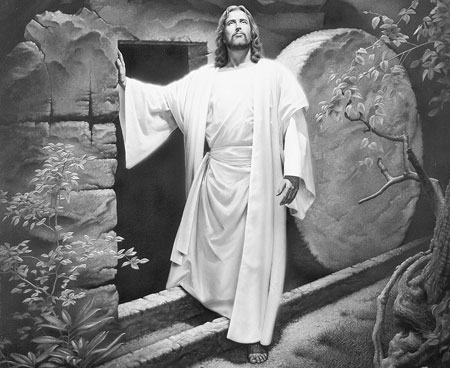
Moses 7:58–69
Enoch Saw the Day When the Earth Would Rest
Moses 7:58. “When Shall the Earth Rest?”
Enoch heard the earth asking when it could rest and be cleansed from the wickedness of its children (see Moses 7:48).
Enoch then saw that the earth would not rest in the days of Noah nor in
the days of Jesus Christ’s mortal ministry. The time when the earth
would finally rest would be at Christ’s Second Coming (see D&C 133:46–52; Articles of Faith 1:10).
Moses 7:59. “I Know Thee”
The Lord called Enoch to be a preacher of righteousness (see Moses 6:26–36).
To help Enoch accomplish his mission, the Lord told him, “My Spirit is
upon you … and thou shalt abide in me, and I in you; therefore walk with
me” (Moses 6:34). Enoch did indeed walk with God (see Moses 6:39) and gained the confidence to say, “I know thee.”
Moses 7:59. “A Right to Thy Throne”
Enoch saw the Saints arise with resurrected bodies, receive crowns, and stand at the right hand of Christ (see Moses 7:56). He then foresaw his own glorious future (see Moses 7:59). God has promised all of His worthy children this same reward (see Romans 8:16–17; Revelation 3:21). Enoch also saw that this glorious future was “not of myself, but through thine own grace” (Moses 7:59). Exaltation in the celestial kingdom of God is obtained as a gift from God, by grace, after all we can do (see 2 Nephi 25:23; D&C 6:13). Regarding grace, the Bible Dictionary states:
“The main idea of the word is divine means of help or strength, given through the bounteous mercy and love of Jesus Christ.
“… It
is likewise through the grace of the Lord that individuals, through
faith in the atonement of Jesus Christ and repentance of their sins,
receive strength and assistance to do good works that they otherwise
would not be able to maintain if left to their own means. This grace is
an enabling power that allows men and women to lay hold on eternal life
and exaltation after they have expended their own best efforts.
“… However, grace cannot suffice without total effort on the part of the recipient” (“grace,” 697; see also 2 Nephi 25:23; Moroni 10:32–33).
Moses 7:62. “Righteousness Will I Send Down out of Heaven; and Truth Will I Send Forth out of the Earth”
President
Ezra Taft Benson explained that the Lord promised “that righteousness
would come from heaven and truth out of the earth. We have seen the
marvelous fulfillment of that prophecy in our generation. The Book of
Mormon has come forth out of the earth, filled with truth, serving as
the very ‘keystone of our religion’ (see Introduction to the Book of Mormon).
God has also sent down righteousness from heaven. The Father Himself
appeared with His Son to the Prophet Joseph Smith. The angel Moroni,
John the Baptist, Peter, James, and numerous other angels were directed
by heaven to restore the necessary powers to the kingdom. Further, the
Prophet Joseph Smith received revelation after revelation from the
heavens during those first critical years of the Church’s growth. These
revelations have been preserved for us in the Doctrine and Covenants”
(in Conference Report, Oct. 1986, 102; or Ensign, Nov. 1986, 79–80).
Moses 7:62. “Truth Will I Cause to Sweep the Earth”
President Ezra Taft Benson taught:
“The Book of Mormon is the instrument that God designed to ‘sweep the earth as with a flood, to gather out [His] elect’ (Moses 7:62). This sacred volume of scripture needs to become more central in our preaching, our teaching, and our missionary work. …
“The
time is long overdue for a massive flooding of the earth with the Book
of Mormon for the many reasons which the Lord has given. …

“We have the Book of Mormon, we have the members, we have the missionaries, we have the resources, and the world has the need.
“The time is now!” (in Conference Report, Oct. 1988, 3–4; or Ensign, Nov. 1988, 4–5).
Moses 7:62. “Zion, a New Jerusalem”
The
Prophet Joseph Smith explained: “And now, I ask, how righteousness and
truth are going to sweep the earth as with a flood? I will answer. Men
and angels are to be co-workers in bringing to pass this great work, and
Zion is to be prepared, even a new Jerusalem, for the elect that are to
be gathered from the four quarters of the earth, and to be established
an holy city” (History of the Church, 2:260; for more on the latter-day Zion [the New Jerusalem], see 3 Nephi 20:22; 21:20–25; Ether 13:2–8; D&C 45:65–71; 57:1–3).
Moses 7:63. Two Zions Will Meet
Concerning
this meeting of the two Zions, President John Taylor said: “When the
time comes that these calamities we read of, shall overtake the earth,
those that are prepared will have the power of translation, as they had
in former times, and the city will be translated. And Zion that is on
the earth will rise, and the Zion above will descend, as we are told,
and we will meet and fall on each other’s necks and embrace and kiss
each other. And thus the purposes of God to a certain extent will then
be fulfilled” (in Journal of Discourses, 21:253).
Moses 7:64–65. The Millennium
During
the Millennium the earth will not be a celestial world. It will be in a
terrestrial, or paradisiacal, condition, cleansed from wickedness. As
the Millennium is ushered in, there will still be people of various
religious beliefs residing on the earth. President Joseph Fielding Smith
wrote:
“When
the reign of Jesus Christ comes during the millennium, only those who
have lived the telestial law will be removed. It is recorded in the
Bible and other standard works of the Church that the earth will be
cleansed of all its corruption and wickedness. Those who have lived
virtuous lives, who have been honest in their dealings with their fellow
man and have endeavored to do good to the best of their understanding,
shall remain. …
“The
gospel will be taught far more intensely and with greater power during
the millennium until all the inhabitants of the earth shall embrace it.
Satan shall be bound so that he cannot tempt any man. Should any man
refuse to repent and accept the gospel under those conditions then he
would be accursed. Through the revelations given to the prophets we
learn that during the reign of Jesus Christ for a thousand years,
eventually all people will embrace the truth.” (Answers to Gospel Questions, 1:108, 110–11; for more on the Millennium, see Isaiah 11:5–9; 65:17–25; D&C 101:26–34).
Moses 7:68–69. “Zion Is Fled”
Enoch’s
people lived on earth for many years before they were taken into
heaven. Concerning this period of time, President Brigham Young said:
“Enoch had to talk with and teach his people during a period of three
hundred and sixty years, before he could get them prepared to enter into
their rest, and then he obtained power to translate himself and his
people” (in Journal of Discourses, 3:320).
Moses 8:1–30
The World Was Filled with Wickedness
Moses 8:1–11. Noah
Many generations of prophets foresaw Noah as the prophet in the days of the cleansing of the earth by flood (see Moses 8:2, 9). Noah was ordained to the higher priesthood when ten years old by his grandfather Methuselah (see D&C 107:52).
He became a preacher of righteousness, even as Enoch. He, his wife, and
his sons—Japheth, Shem, and Ham—and their wives were the only people to
survive the Flood. Noah holds the keys of his dispensation and stands
next to Adam in authority (see History of the Church, 3:386).
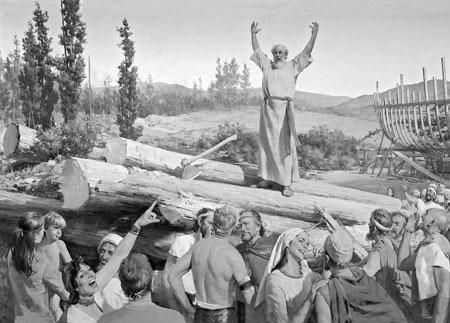
Noah is the angel Gabriel (see History of the Church,
3:386), who appeared to Zacharias to announce that he would be the
father of John the Baptist and to Mary to announce that she would be the
mother of Jesus Christ. Noah also functions in the calling of an Elias (see D&C 27:6–7), meaning one who prepares or restores. Through his various appearances, Noah has performed both of these functions.
Moses 8:3. The Posterity of Methuselah
A list of the “sons of God,” which began in Moses 5:8–25, continues in Moses 8 with the addition of Lamech (v. 5), Noah (v. 9), and Noah’s three sons (v. 12). These brethren were all holders of the higher priesthood (see D&C 107:40–52; for more information about Methuselah, see D&C 107:50, 52–57).
Moses 8:14–15. The Daughters of the Sons of God
President Joseph Fielding Smith applied the lessons from Moses 8:14–15 to our day, saying:
“Because
the daughters of Noah married the sons of men contrary to the teachings
of the Lord, his anger was kindled, and this offense was one cause that
brought to pass the universal flood. … The daughters who had been born,
evidently under the covenant, and were the daughters of the sons of
God, that is to say of those who held the priesthood, were transgressing
the commandment of the Lord and were marrying out of the Church.
Thus they were cutting themselves off from the blessings of the
priesthood contrary to the teachings of Noah and the will of God. …
“Today
there are foolish daughters of those who hold this same priesthood who
are violating this commandment and marrying the sons of men; there are
also some of the sons of those who hold the priesthood who are marrying
the daughters of men. All of this is contrary to the will of God just as
much as it was in the days of Noah” (Answers to Gospel Questions, 1:136–37).
Moses 8:16. Noah Taught the Gospel of Jesus Christ
President
Ezra Taft Benson, then President of the Quorum of the Twelve Apostles,
explained: “From the days of Father Adam to the days of the Prophet
Joseph Smith and his successors, whenever the priesthood has been on the
earth, a major responsibility has been the preaching of the saving,
eternal principles of the gospel—the plan of salvation. Father Adam
taught these things to his own children. (Moses 5:12.) Consider Noah’s long years of missionary effort and the preachings of all the ancient prophets. (Moses 8:16–20.)
Each in his day was commanded to carry the gospel message to the
children of men and call them to repentance as the only means of
escaping the pending judgments” (in Conference Report, Apr. 1974, 153;
or Ensign, May 1974, 105).
Moses 8:17. “My Spirit Shall Not Always Strive with Man”
President
Harold B. Lee stated, “This means the withdrawing of that vital light
which all could have enjoyed if they had kept the commandments” (Stand Ye in Holy Places [1974], 119; see also 1 Nephi 7:14; 2 Nephi 26:11; Mormon 5:16; Ether 2:15; 15:19; Moroni 8:28; 9:4; D&C 1:33).
Moses 8:25. “It Repented Noah, and His Heart Was Pained”
Note that this verse is an important and inspired correction to Genesis 6:6,
which reads: “And it repented the Lord that he had made man on the
earth, and it grieved him at his heart.” The Hebrew word used here, and
translated repented in the Bible, is nacham (naw-kham), which literally means “to sigh,” “to breathe strongly,” “to be sorry,” “to pity.”
Moses 8:27. “Noah Was a Just Man, and Perfect in His Generation”
Elder Mark E. Petersen, who was a member of the Quorum of the Twelve Apostles, wrote:
“Noah,
who built the ark, was one of God’s greatest servants, chosen before he
was born as were others of the prophets. He was no eccentric, as many
have supposed. Neither was he a mythical figure created only in legend.
Noah was real. …
“Let
no one downgrade the life and mission of this great prophet. Noah was
so near perfect in his day that he literally walked and talked with
God. …
“Few
men in any age were as great as Noah. In many respects he was like
Adam, the first man. Both had served as ministering angels in the
presence of God even after their mortal experience” (Noah and the Flood [1982], 1–2).
Moses 8:26–30. The Flood
President
Joseph Fielding Smith said: “So the Lord commanded Noah to build an ark
into which he was to take his family and the animals of the earth to
preserve seed after the flood, and all flesh that was not in the ark
perished according to the Lord’s decree. Of course this story is not
believed by the wise and the great among the children of men, any more
than was Noah’s story in his day” (Doctrines of Salvation, 3:39).
President
John Taylor taught: “God destroyed the wicked of that generation with a
flood. Why did He destroy them? He destroyed them for their benefit, if
you can comprehend it” (in Journal of Discourses, 24:291; see also 19:158–59 for President Taylor’s view of the Flood as an act of love).

No comments:
Post a Comment